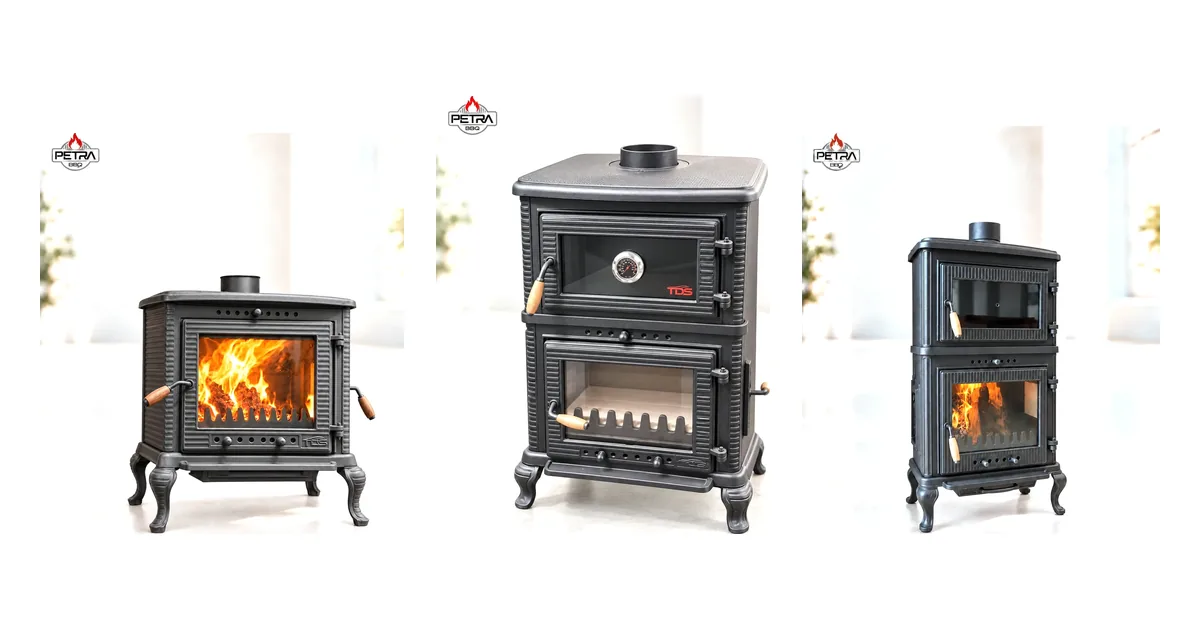
Why Does a Cast-Iron Stove Smell and Smoke on First Firing? Break-In and Care
Prepared by: the Yak Gelsin teamLast updated:
Short answer: a smell and light smoke during a new cast-iron stove's first few fires are normal; the high-temperature paint on the body is curing and the smell fades with each fire. One cast-iron stove manufacturer's break-in procedure calls for three small fires: a maximum surface temperature of 93 °C on the first, 149 °C on the second and gradually 204 °C on the third, letting the stove cool to room temperature in between. The reason is that cast iron expands as it heats and contracts as it cools.
The values below are one manufacturer's procedure, not a rule for every stove; check your manual for your own model's break-in time and temperature.
All cast-iron models and current prices: Cast-iron stove prices →
How do you break in a stove on first firing?
| Fire | Maximum surface temperature | Duration | Then |
|---|---|---|---|
| 1st fire: small kindling fire | 93 °C (200 °F) | About 1 hour | Cool to room temperature |
| 2nd fire | 149 °C (300 °F) | 1 hour | Cool to room temperature |
| 3rd fire | Gradually 204 °C (400 °F) | Not stated | Cool; break-in complete |
The same procedure says to close the primary air fully if the limit is exceeded during break-in, and warns: if any part of the stove or the chimney connector glows, you are overfiring, which can cause a house fire or serious damage to the stove or chimney. Without a surface thermometer, keep the fire small: a little dry kindling and thin, dry wood.
How long do the paint smell and smoke last?
According to the manufacturer the smell and smoke diminish with each fire as the paint cures; open a window or door to ventilate meanwhile. The flue pipe is similar: one pipe manufacturer says a moderate paint-like odour during the first few uses is normal and disappears after a few uses. If the smell persists after several fires, or smoke comes into the room instead of going up the flue, it is not curing but a draught or connection problem: why a stove pipe drips tar and chimney cleaning.
Can a cast-iron stove crack? What to avoid
- A sudden big fire: Cast iron expands as it heats; do not skip break-in and fill the stove on day one.
- Water: Keep water and wet cloths away from the hot body and glass. For its ceramic-glass stoves the manufacturer says the glass must not be wiped with a wet cloth while hot.
- Overfiring: A glowing body or pipe is a sign of overfiring; close the air and add no fuel.
- Wrong fuel: Burn only the fuel the manufacturer lists ("wood, coal" for the Natural 20h–60h). The EPA says not to burn coated, painted or pressure-treated wood, trash or plastics.
Basic care
- Glass: Clean it when cold with a damp sponge and a little ash (manufacturer). For the Impera V2 the manufacturer lists an air curtain (Airwash) that reduces soot on the glass.
- Ash: The Impera V2 has a sliding ash drawer (manufacturer). Once cool, keep ash in a metal container with a lid, outside and at least 3 m from the house (USFA).
- Flue and pipe: The USFA says to have the chimney inspected and cleaned by a professional every year. The Impera V2 flue outlet is Ø130 mm (manufacturer); for pipes and elbows see stove accessories.
- Clearance and floor: The USFA says a wood stove must be at least 3 ft (about 90 cm) from anything that can burn; for a non-combustible base see the stove base guide.
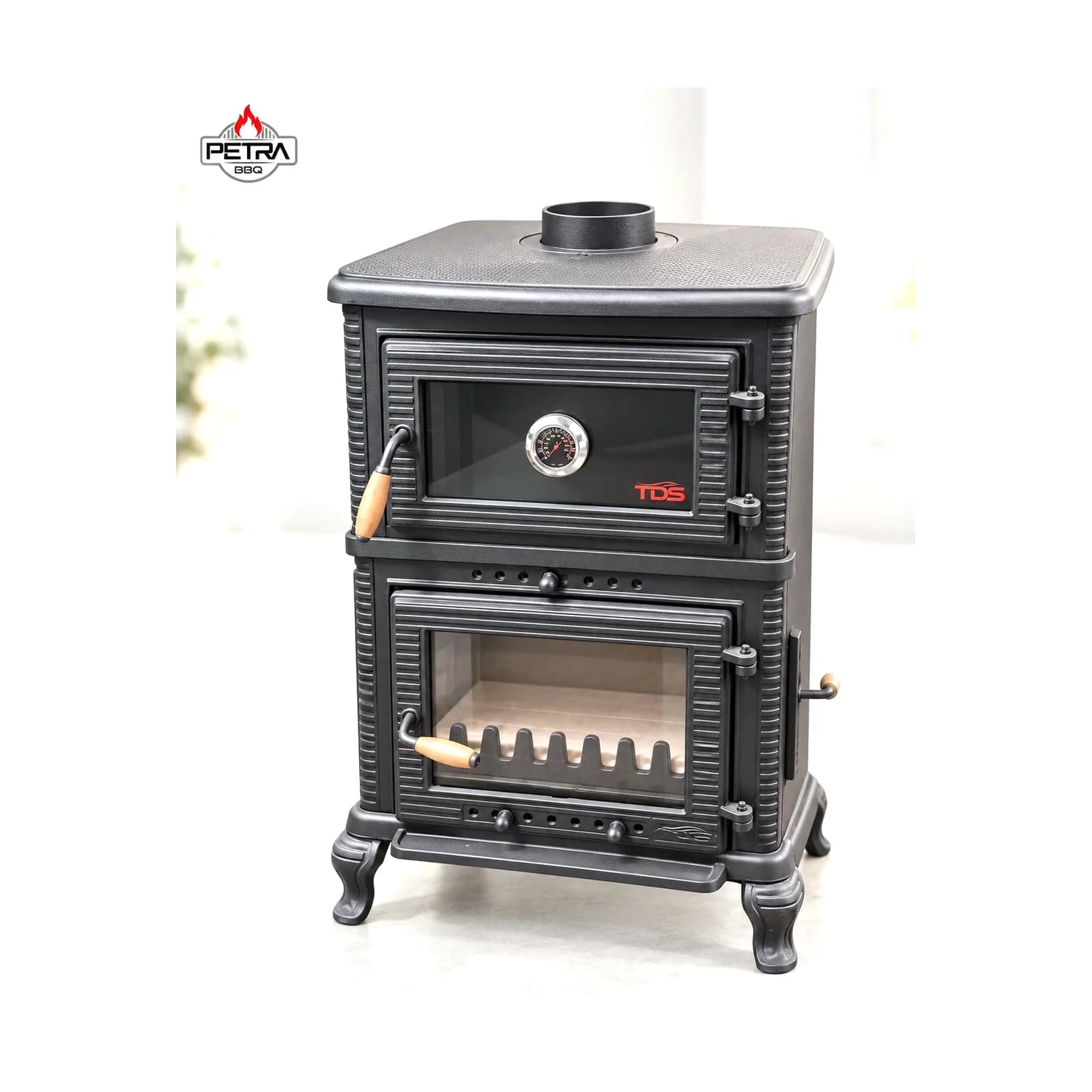
Natural Stove 50h Cast-Iron Vertical Cooker Stove with Oven (Wood & Coal)
Power range: 8–12 kW · Heating area: 60–70 m²
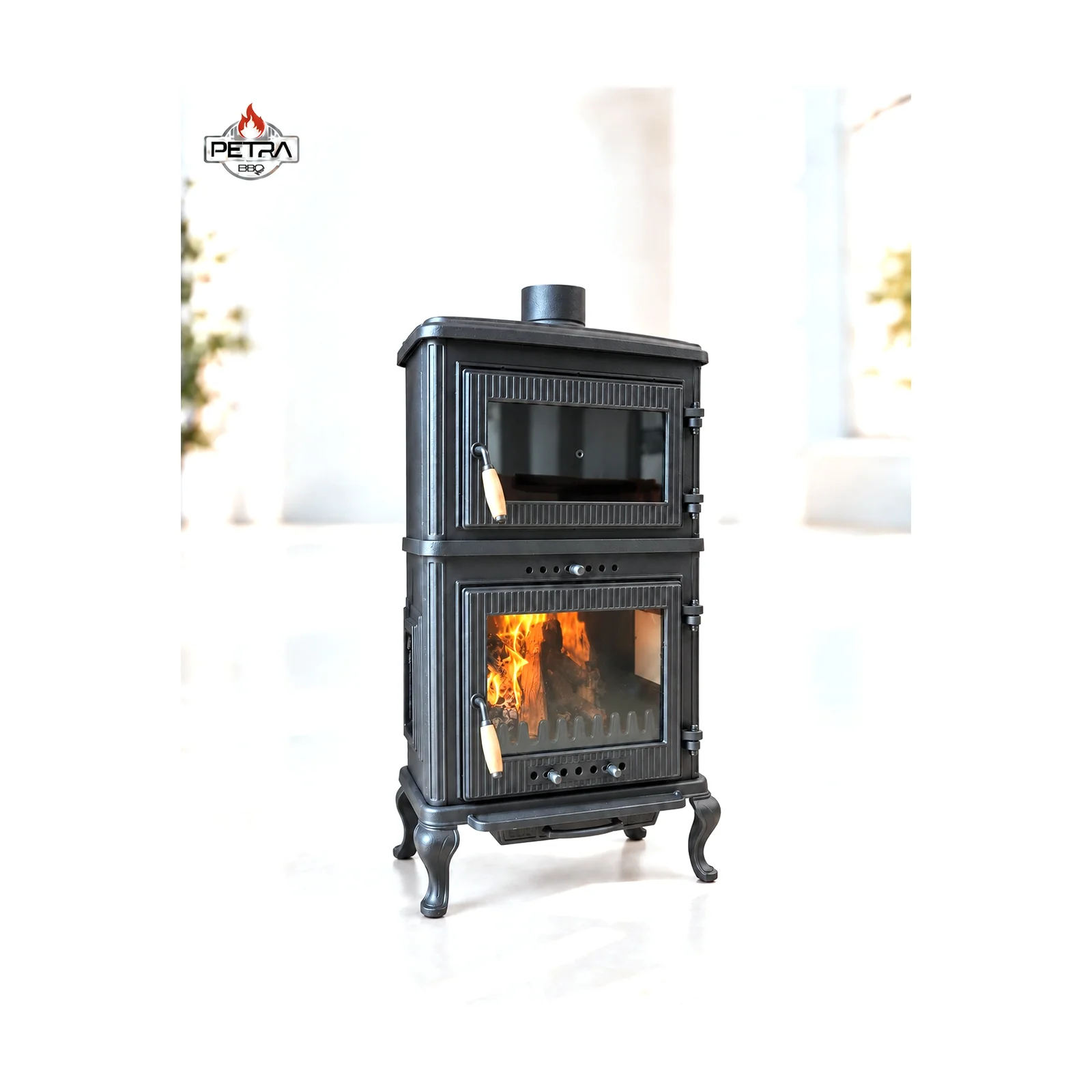
Natural 60h Cast-Iron Vertical Cooker Stove with Oven (Wood & Coal)
Power range: 12–14 kW · Heating area: 70–80 m²
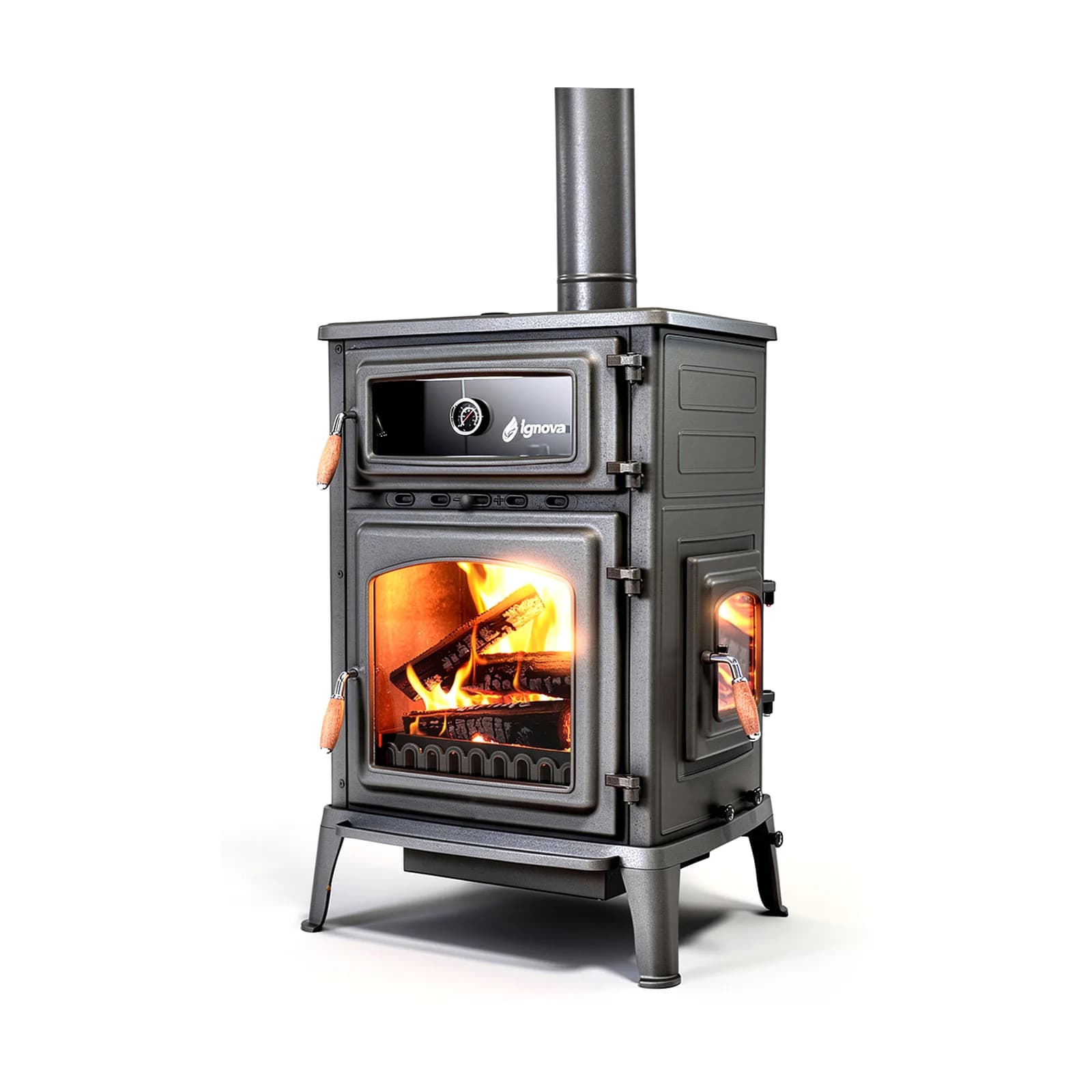
Ignova Impera V2 Cast-Iron Fireplace Stove with Oven
Heat output: 14 kW · Heating area: 70–140 m²
What does it depend on?
- The model's manual: The number, temperature and length of break-in fires vary between manufacturers.
- Dryness of the wood: The EPA wants wood below 20% moisture; damp wood smokes on the first firing too: how to dry firewood.
- Flue draught: With weak draught, smell and smoke come back into the room.
- Area to heat: For the output you need, the stove sizing calculator; for cast iron versus sheet steel, cast-iron or sheet-steel stove.
Safety note
No stove is "smokeless"; pellets, wood and coal all produce smoke and carbon monoxide when they burn. A flue of the right diameter that draws properly and sealed pipe joints are essential. Use a carbon monoxide detector at home; with headache, dizziness or nausea, ventilate, get outside and call 112: stove gas symptoms and carbon monoxide detectors.
Frequently asked questions
Why does a cast-iron stove smoke on first firing?
The high-temperature paint on the body cures during the first fires; the smell and light smoke fade with each fire.
How many fires does it take to break in a cast-iron stove?
One manufacturer's procedure calls for three gradual fires (93, 149 and 204 °C surface temperature); check your manual for your model.
Should you open a window on first firing?
Yes. The manufacturer recommends opening a window or door for ventilation while the paint cures.
Can a cast-iron stove crack?
Sudden intense heat, overfiring and water on a hot body can crack it. Break it in gradually, control the air and never pour water on it.
How do you clean a cast-iron stove?
When cold: wipe the glass with a damp sponge and a little ash, keep the ash in a metal container outside, and have the chimney checked by a professional every year.
Sources: break-in procedure and paint curing, Jøtul, "Cast iron stove and fireplace insert break-in procedure"; flue pipe paint odour, DuraVent, DuraBlack installation instructions; what not to burn and wood moisture, U.S. EPA Burn Wise, "Best Wood-Burning Practices"; clearance, ash and chimney inspection, U.S. Fire Administration, "Heating Fire Safety"; manufacturer pages Ignova Impera V2, Natural 20h, Natural Atlas (glass care).
Products in this article
- Natural Stove 50h Cast-Iron Vertical Cooker Stove with Oven (Wood & Coal)₺27,083.33 excl. VAT, ₺32,500 incl. VAT
- Natural 60h Cast-Iron Vertical Cooker Stove with Oven (Wood & Coal)₺31,250 excl. VAT, ₺37,500 incl. VAT
- Ignova Impera V2 Cast-Iron Fireplace Stove with Oven₺30,000 excl. VAT, ₺36,000 incl. VAT
Current Price List
Starting prices for our coal, firewood and olive-pomace products: the amount excluding VAT, with the VAT-inclusive amount below it. Products without a listed price are quoted on WhatsApp.
| Product | Unit | Starting Price |
|---|---|---|
| Süper Enerji Siberian Coal | 25 kg bag | ₺375 excl. VAT, ₺450 incl. VAT |
| Domestic Soma CoalLimited stock | 25 kg bag | ₺180 excl. VAT, ₺216 incl. VAT |
| Cal Energy İmbat Coal — Grade 1Limited stock | 25 kg bag | ₺375 excl. VAT, ₺450 incl. VAT |
| Cal Energy İmbat Coal — Grade 2Limited stock | 25 kg bag | ₺350 excl. VAT, ₺420 incl. VAT |
| Cal Energy İmbat Nut Coal — Grade 1Limited stock | 25 kg bag | ₺375 excl. VAT, ₺450 incl. VAT |
| Cal Energy İmbat Nut Coal — Grade 2Limited stock | 25 kg bag | ₺350 excl. VAT, ₺420 incl. VAT |
| Central Heating Coal (Walnut Size)Made to order | — | Ask on WhatsApp |
| Central Heating Coal (Nut Size)Made to order | — | Ask on WhatsApp |
| Block Coal (Large Lump)Made to order | — | Ask on WhatsApp |
| Domestic Lignite Coal (Lump)Made to order | 25 kg bag | ₺160 excl. VAT, ₺192 incl. VAT |
| Root Coal (Domestic)Made to order | 40 kg sack | ₺290 excl. VAT, ₺348 incl. VAT |
| Pressed Coal (Briquettes)Made to order | — | Ask on WhatsApp |
| Oak Firewood (Dry) | 1 sack (20-25 kg) | ₺400 excl. VAT, ₺480 incl. VAT |
| Yellow Oak Stove Wood | Bagged — 30 kg | ₺400 excl. VAT, ₺480 incl. VAT |
| Red Oak Stove Wood | Bagged — 28 kg | ₺400 excl. VAT, ₺480 incl. VAT |
| Oak Firewood (6 Months Seasoned) | 1 sack (20-25 kg) | ₺400 excl. VAT, ₺480 incl. VAT |
| Yellow Oak Firewood (6 Months Seasoned) | 1 sack (20-25 kg) | ₺400 excl. VAT, ₺480 incl. VAT |
| 100% Pine Wood Pellets (ENplus A1) | 15 kg bag | ₺200 excl. VAT, ₺240 incl. VAT |
| Hazelnut Shell FuelMade to orderPrepaid | — | Ask on WhatsApp |
| Pine Kindling and Wood Pieces | Bag (17-23 kg) | ₺250 excl. VAT, ₺300 incl. VAT |
| Pirina (Olive Pit Fuel)Prepaid | 25 kg sack | ₺225 excl. VAT, ₺270 incl. VAT |
The top line of each price excludes VAT (+ VAT); the VAT-inclusive amount below it is what you pay. Prices can change. Message us on WhatsApp for the current price and a quote including delivery.
Ask for a Price on WhatsApp