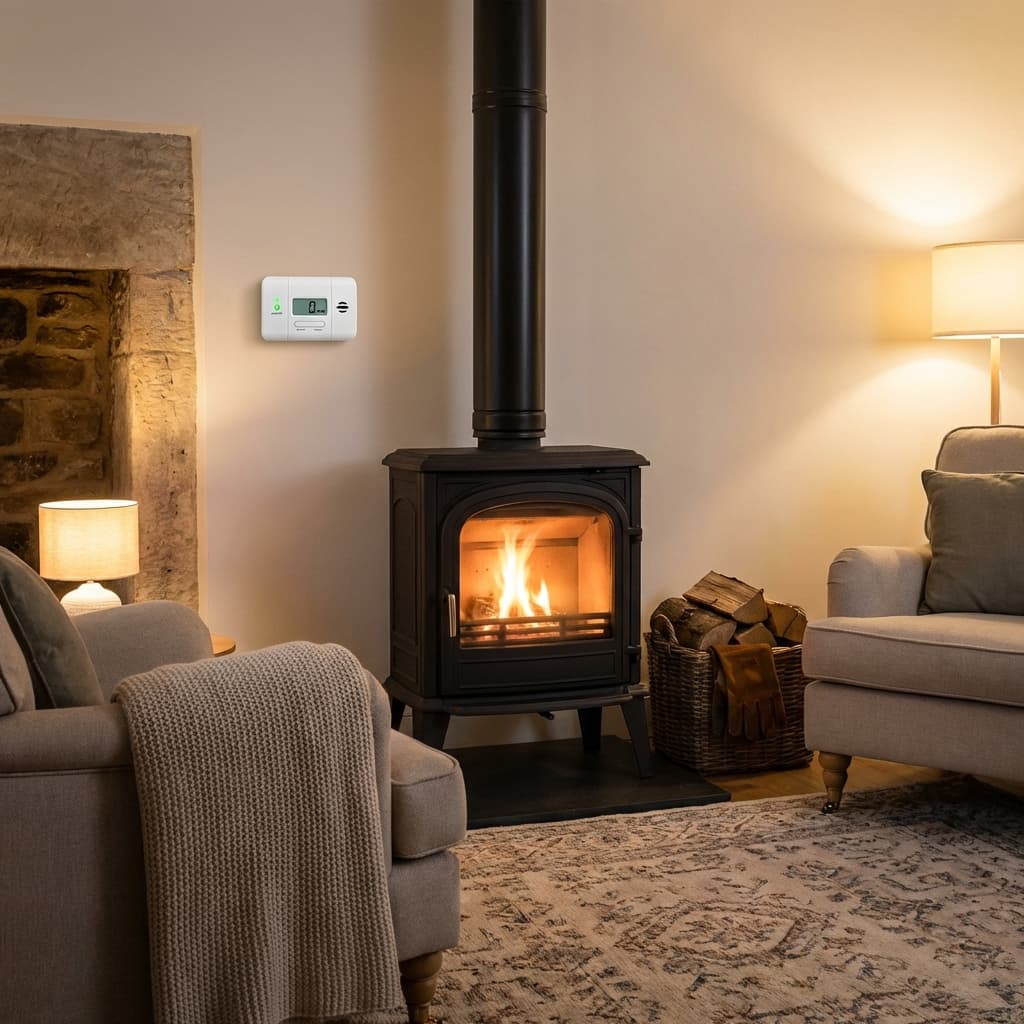
The efficiency and safety of your stove are decided somewhere most people never look: inside the flue. A neglected chimney wastes part of your fuel and is the leading cause of the chimney fires that damage homes every winter. This article explains why creosote forms, how the risk builds and what to do before the season starts.
What Is Creosote and Why Does It Build Up?
The smoke given off by burning wood and coal carries water vapour, unburnt gases and soot particles. When that smoke meets a cold surface inside the flue it condenses, leaving a dark, sticky, tar-like layer on the inner wall. That layer is creosote, and it is highly flammable.
The main causes of rapid build-up are: burning damp or under-seasoned wood; running the stove “choked” with the air supply nearly closed, i.e. long, low-temperature burns; using resinous pine as the main fuel; having a cold, uninsulated flue or one running along an outside wall; and weak draught caused by too many elbows or a long horizontal pipe run.
Note that most of these causes lose you efficiency and build deposits at the same time. Sweeping the chimney is a matter of economy as much as safety.
How Does a Chimney Fire Start?
A layer of creosote inside the flue can ignite once temperatures rise enough — for example during a fast, fierce burn. A chimney fire is that deposit igniting inside the flue, and it can reach several hundred degrees.
The signs are usually unmistakable: a roaring, aircraft-like rumble from the chimney; heavy sparks and flame at the chimney top; abnormal heat and cracking noises from the pipes. If this happens, get everyone out of the house and call 112 first. If you can do so safely on your way out, add no more fuel and close the air inlets. Never pour water down a hot flue — the sudden steam can crack the chimney and cause it to burst. A chimney fire often cracks the flue itself, so the chimney must be inspected afterwards.
How Often Should a Flue Be Swept?
The general rule: before every heating season, at least once a year. Heavy use raises that frequency.
If you burn through most of the day all season, add a mid-season check. If you burn damp wood or very resinous pine, deposits form faster and a second sweep within the season may be needed. Continuously running systems such as central heating boilers need periodic boiler servicing alongside the pre-season sweep. Even in a holiday home where the stove is rarely lit, a pre-season inspection is still essential — unused flues collect bird nests and debris.
Plan the sweep for September. In November and December sweeps are fully booked, appointments are hard to find and costs rise.
What Wet Wood Does to a Flue
Damp wood must first boil off the water inside it. That has two effects. First, the energy heats water instead of your room — a direct loss of heat. Second, the flue gas temperature drops; cooler smoke condenses more readily inside the flue and leaves tar behind.
The result is that a season burned on wet wood leaves many times more creosote in your chimney than a season on dry wood. The cheapest way to avoid sweeping costs is to burn properly seasoned wood.
Signs of a Blocked or Poorly Drawing Flue
If you notice any of the following, have the flue checked before the season begins:
Smoke entering the room when you open the stove door; a stove that is hard to light, burns feebly and keeps going out; a glass door that blackens with soot within a short time; a smell of soot in the room; an ash pan filling abnormally fast; brown-black tar weeping from the pipe joints. These are the classic indications of weak draught and deposits inside the flue.
Smoke blowing back also means a carbon monoxide risk. You will find detailed precautions on that in our article “Beware of Stove Poisoning”.
Pre-Season Stove Maintenance
Go over the stove itself along with the flue:
Body and internals
Check for cracks, perforation or heavy rust. Replace broken fire bricks; they protect the body from excessive heat. Clean the grate and ash pan, and renew them if deformed.
Door and gasket
The door must close fully, with a gasket that is neither crushed nor hardened. A leaking door makes your air control meaningless and the burn impossible to regulate.
Pipes
Replace thinned, perforated or rusted pipe sections. Joints must be sealed, elbows kept to a minimum, and the horizontal run kept short with a slight upward slope towards the flue.
Cowl and chimney top
The cowl must be present and sound; it keeps out both rain and bird nests. The chimney top also needs enough height relative to the roofline for the draught to work properly.
When to Call a Professional
You can brush off light soot yourself, but call a specialist when: a thick, hardened, glossy tar layer has formed inside the flue; the chimney structure is cracked, shedding brick or showing heat marks on the wall; there has been a chimney fire before; the flue is long, heavily bent or unreachable without going on the roof; you are installing a new stove and are unsure whether the flue cross-section suits its output; or the system is a central heating boiler.
Sweeping means working at height, so do not attempt it without safety equipment. A single pre-season appointment improves your fuel efficiency and removes one of the most serious winter risks in the house. When you place your fuel order, put the chimney on the same calendar — planned together, winter goes far more smoothly.
Current Price List
Starting prices for our coal, firewood, pellet and olive-pomace products.
| Product | Unit | Starting Price | Detail |
|---|---|---|---|
| Sibirya Kömürü (Portakal) | 25kg Torba | ₺375 | View |
| Yerli Soma Kömürü | 25kg Torba | ₺180 | View |
| Kalorifer Kömürü (Ceviz) | 25kg Torba | ₺320 | View |
| Kalorifer Kömürü (Fındık) | 25kg Torba | ₺310 | View |
| Karpuz Kömür (Blok) | 25kg Torba | ₺280 | View |
| Yerli Linyit Kömürü (Parça) | 25kg Torba | ₺160 | View |
| Kök Kömür (Yerli) | 40kg Çuval | ₺290 | View |
| Pres Kömür (Briket) | 25kg Torba | ₺190 | View |
| Meşe Odunu (Kuru) | 1 Çuval (20-25kg) | ₺150 | View |
| Sarı Meşe Sobalık Odun | Çuvallı — 30 kg | ₺400 | View |
| Meşe Odunu (6 Aylık) | 1 Çuval (20-25kg) | ₺130(estimate) | View |
| Sarı Meşe Odunu (6 Aylık) | 1 Çuval (20-25kg) | ₺150(estimate) | View |
| Odun Peleti (Çam) | 15kg Torba | ₺220 | View |
| Fındık Kabuğu Yakıtı | 25kg Çuval | ₺130 | View |
| Tahta Parçası (Çam) | Torba (17-23 kg) | ₺250 | View |
| Pirina (Zeytin Çekirdeği Yakıtı) | 25kg Çuval | ₺110 | View |
Prices can change. Message us on WhatsApp for the current price and a quote including delivery.
Ask for a Price on WhatsApp