Free Calculator
How Many kW Should a Pellet Stove Be?
Enter the size of your home, its insulation and your climate zone to see the right pellet stove output (kW), how many kilos and bags of pellets it burns a month, and the monthly cost at the current bag price. Send us the result on WhatsApp with one tap.
Recommended stove output
10 kW kW class pellet stove
Calculated heat demand ≈ 8.2 kW
Estimated pellet consumption
≈ 464 kg a month
≈ 31 bags × 15 kgor 24 bags × 20 kg
- 1.93 kg/hour (at the demand output)
- 15.5 kg a day (8 hours)
- ≈ 2,318 kg over a 5-month season (155 bags × 15 kg or 116 bags × 20 kg)
How long does one bag last?
- 15 kg bag: at full output (10 kW) ≈ 6.3 h · at low output (30%) ≈ 21 h
- 20 kg bag: at full output (10 kW) ≈ 8.4 h · at low output (30%) ≈ 28 h
Estimated pellet cost
Monthly
₺6,200 excl. VAT, ₺7,440 incl. VAT5-month season
₺31,000 excl. VAT, ₺37,200 incl. VATBased on the 15 kg bag (cheapest per kg, ₺13.33 + VAT (VAT incl. ₺16)/kg); whole bags.
Summary
A 120 m² home with medium insulation and 2.7 m ceilings in climate zone 1 needs about 8.2 kW of heat; a 10 kW class pellet stove is suitable. Running 8 hours a day it burns about 464 kg of pellets a month (≈ 31 bags of 15 kg), about 2,318 kg over a 5-month season. At the current bag price that is about ₺6,200 + VAT (VAT incl. ₺7,440) a month.
Get stove and pellet prices on WhatsApp+90 531 585 62 29This is a rough estimate, not a heat-loss calculation. The real need depends on window area, building type (middle floor / detached), the number of rooms heated and the stove's efficiency. Consider one class up when choosing a stove; write to us for the final choice.
Related pages
- Pine Wood Pellets (ENplus A1) — price and order →
- Pellet stoves and other stoves →
- Winter fuel calculator (tons / bags) →
- How many m² does a pellet stove heat? →
- How many kilos of pellets does a pellet stove burn a day? →
- Which 8 kW pellet stove to buy? →
- How many m² does a 12 kW pellet stove heat? →
- Pellet range cookers: models →
- What is a boiler pellet stove? →
- What flue does a pellet stove need? →
- How many watts does a pellet stove draw? →
Models for this need
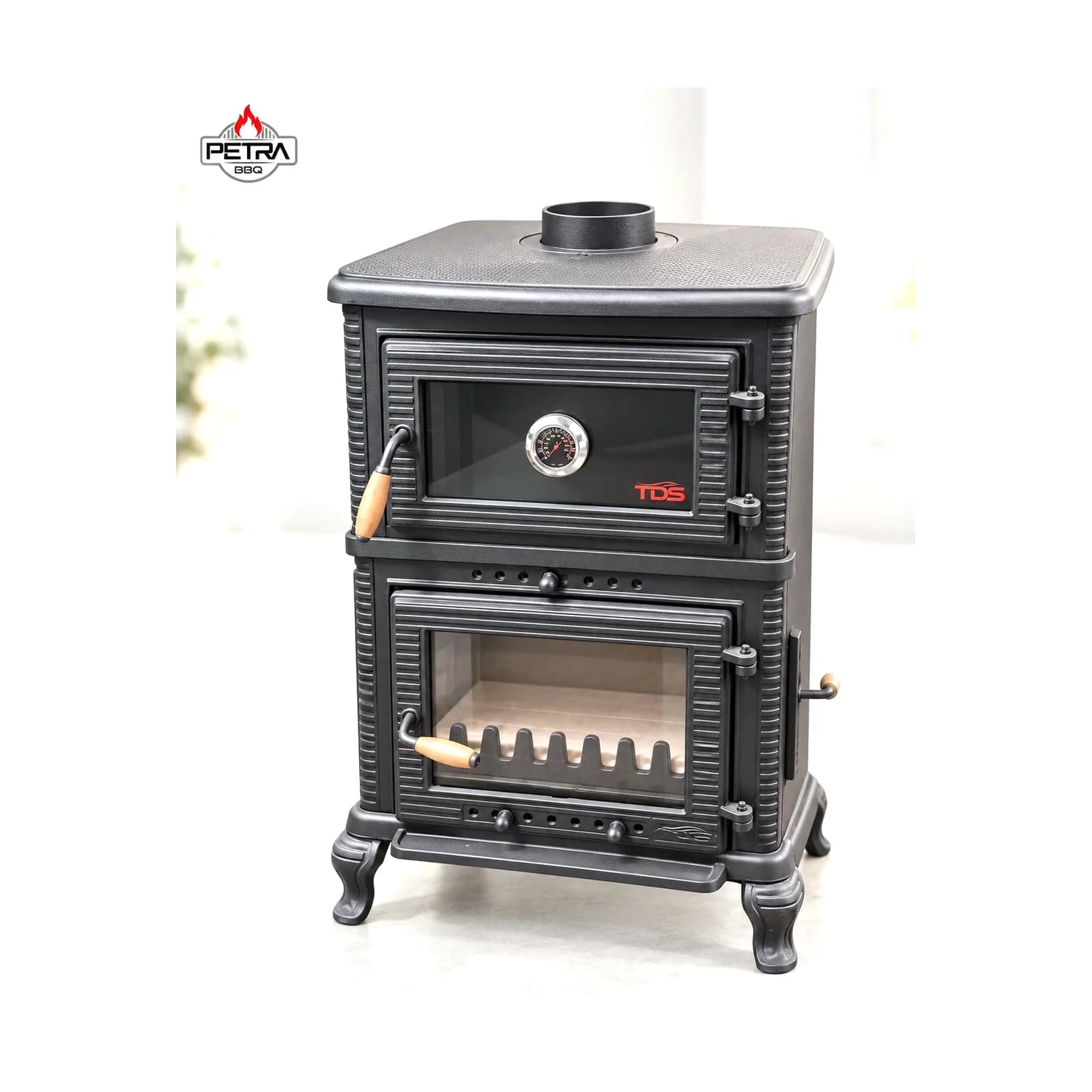
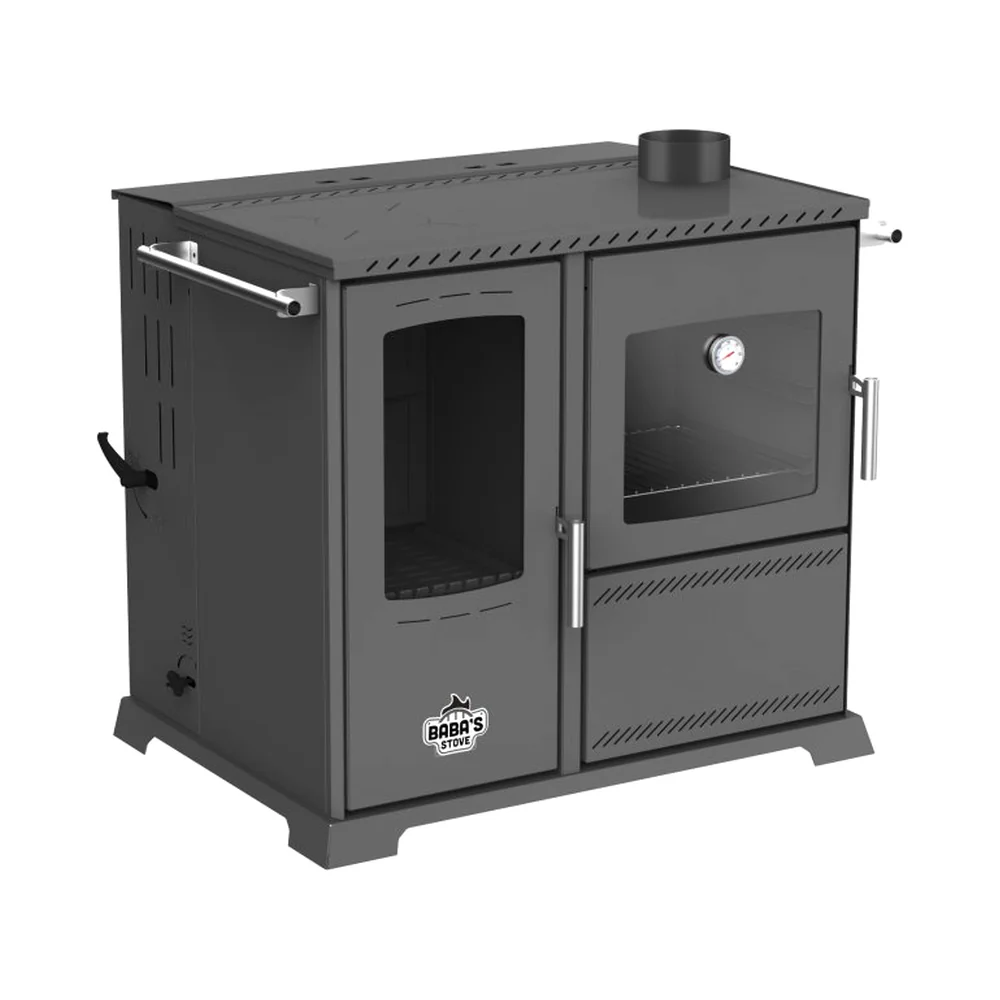
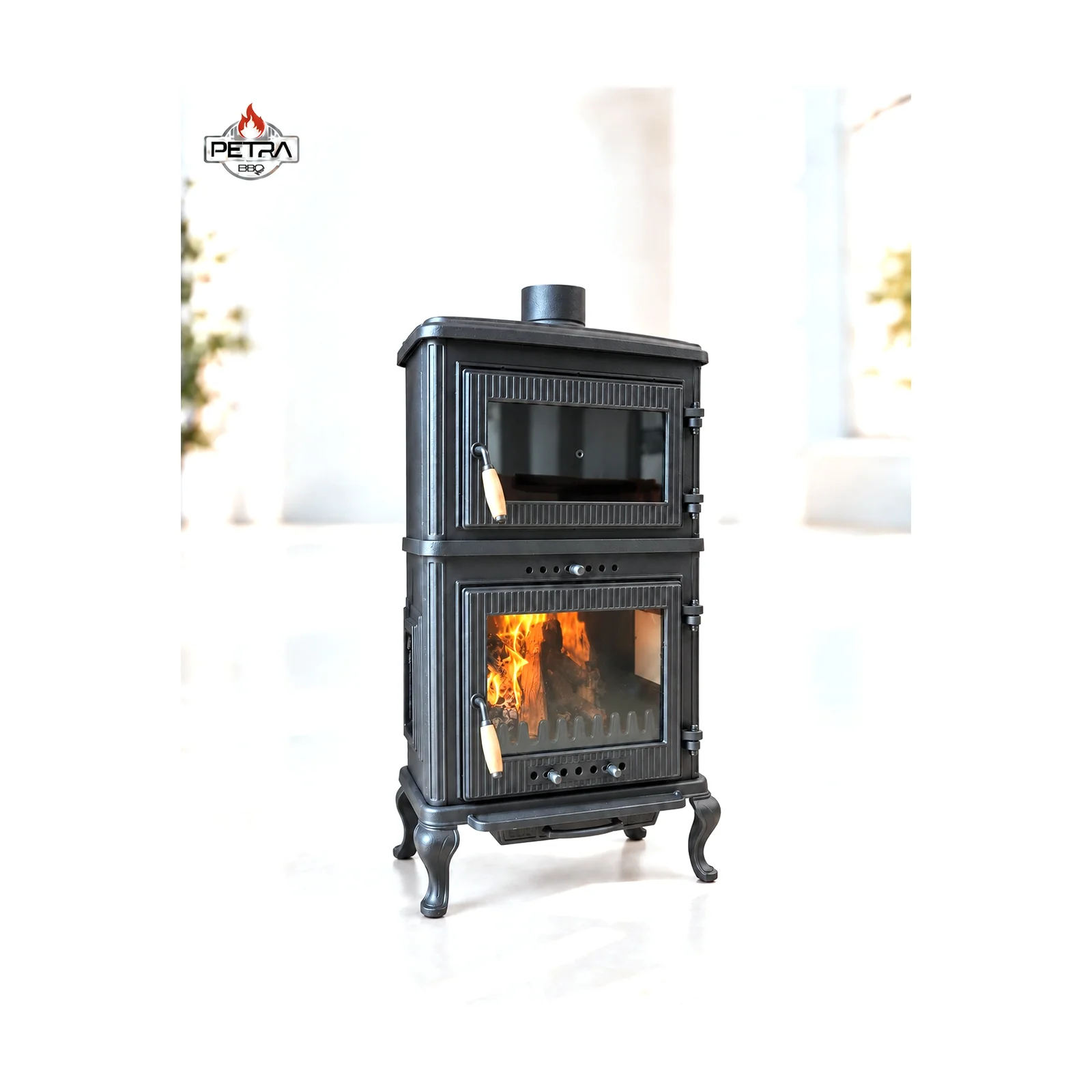
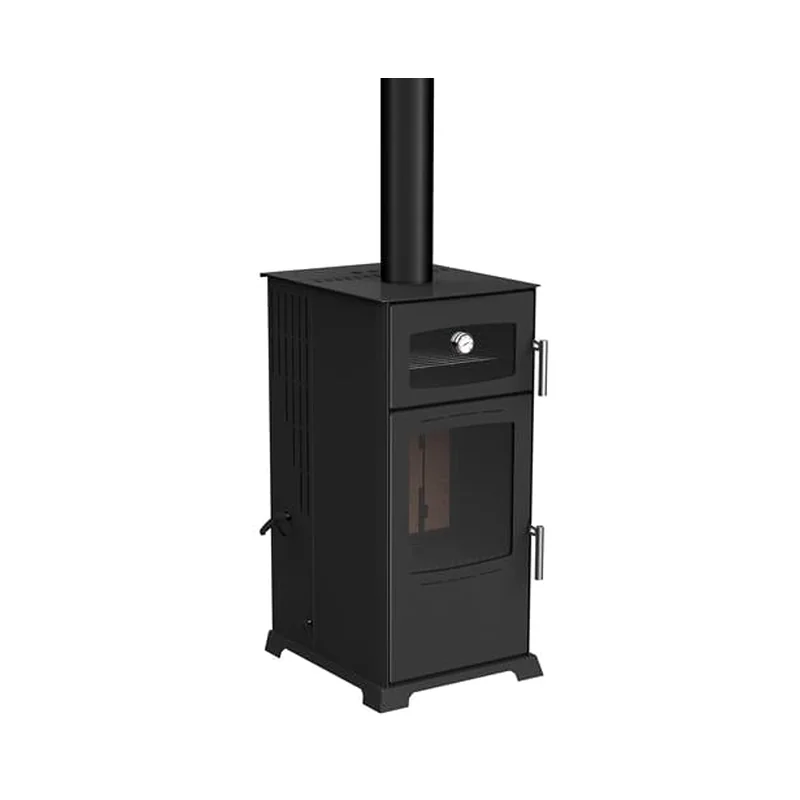
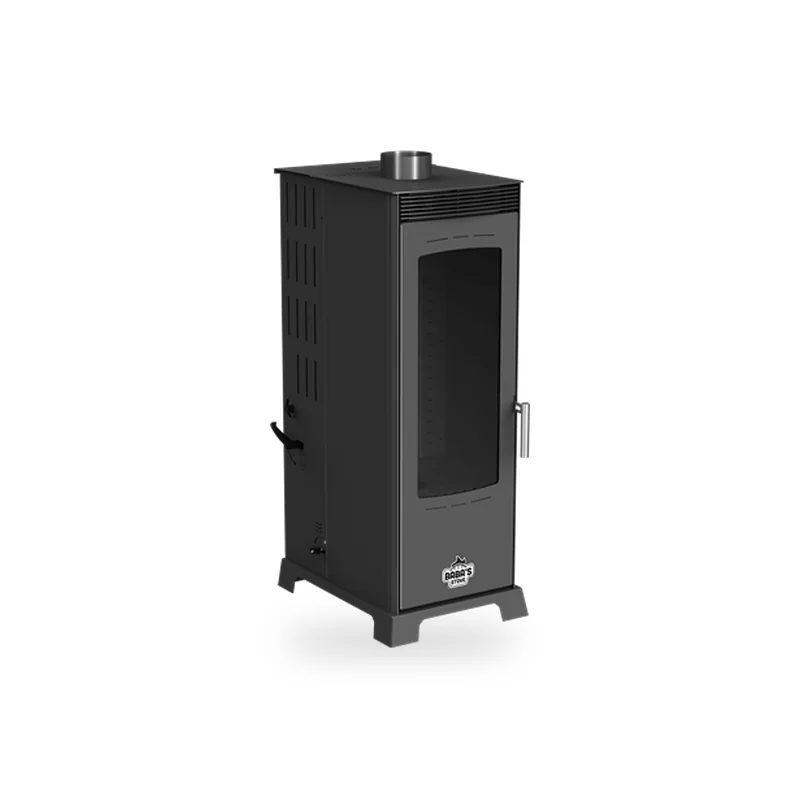
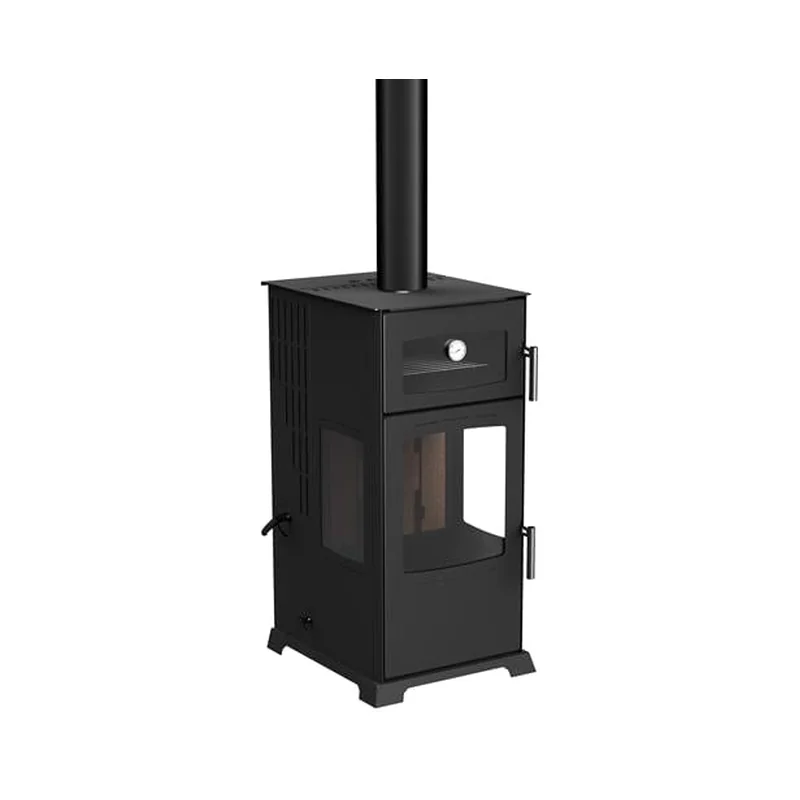
Stoves that cover the ≈ 8.2 kW need according to the manufacturer's stated output; closest output first, then price. Models without a stated heat output are not listed.
How do we calculate?
1. Heat demand (W/m²)
Good insulation 60, medium 80, poor 100 W/m² for a 2.7 m ceiling in climate zone 2. This is the common heating-load rule of thumb (roughly 50–80 W/m² for well-insulated new buildings, 100–160 W/m² for uninsulated old ones); because a stove heats only the rooms in use we take the lower-to-middle band. It is not an engineering heat-loss calculation (DIN EN 12831 / TS 2164).
2. Climate zone factor
Zone 1 ×0.85 · Zone 2 ×1.00 · Zone 3 ×1.15 · Zone 4 ×1.30. The four zones are the degree-day regions of TS 825 (Thermal Insulation Requirements for Buildings), zone 1 the warmest and zone 4 the coldest. The factors are simple ±15% steps around zone 2, not verified degree-day ratios: an official per-zone design-temperature table could not be consulted. In zones 3 and 4 the real difference may be larger, so consider one class up.
3. Ceiling height
Heating is about volume, not floor area: factor = ceiling height / 2.7 m.
4. Stove class
kW needed = m² × W/m² × zone factor × ceiling factor / 1000, rounded UP to the common pellet stove classes (6, 8, 10, 12, 15 kW). The nominal kW of a stove is its heat OUTPUT (EN 14785 test); fuel input = output / efficiency.
5. Pellet consumption
kg/hour = kW ÷ (4.8 kWh/kg × 88%) ≈ 0.237 kg per kWh of heat. ENplus A1 requires a net calorific value of at least 16.5 MJ/kg = 4.6 kWh/kg; pine pellets typically give 4.6–4.9, so 4.8 is used. Stove efficiency at nominal output is typically 85–92% in EN 14785 declarations; 88% is used. Monthly use = kg/hour at the DEMAND output × hours/day × 30; season = × months. "One bag lasts" is given at the nominal output of the recommended class and at 30% of it (typical low setting).
6. Cost
From the published bag price on the product page (15 kg or 20 kg, whichever is cheaper per kg), whole bags, shown as "+ VAT" with the VAT-inclusive total underneath. No price is written into the calculator: if no bag price is published, the cost step is skipped and you get the price on WhatsApp.
Formula
kW = m² × W/m² × zone × (ceiling / 2.7) / 1000 → class ∈ {6, 8, 10, 12, 15} · kg/h = kW ÷ (4.8 × 0.88)
Sources
- ENplus ST 1001:2022, Annex A Table 4 — net calorific value ≥ 16.5 MJ/kg (≥ 4.6 kWh/kg)
- EN 14785 — residential pellet stove test standard; efficiency and nominal heat output (IEA Bioenergy Task 32 report)
- Example EN 14785 declaration of performance (Austroflamm Mo Duo): 9.4 kW nominal output, 90% efficiency at nominal output
- TS 825 degree-day regions — Aksoy & Bektaş Ekici (2013), METU JFA 30/2
- Heating-load rule of thumb (W/m² by building age) — 42watt, "Wärmebedarf berechnen"
The calculator at /soba-hesaplama gives a class; the models under the result are listed only by the manufacturer's stated heat output, and new models are added as they come into stock.
How Many m² Does a Pellet Stove Heat?
A stove's nominal kW is its heat output. How much output a home needs depends first on insulation: about 60 W per m² in a well-insulated new building, 80 W/m² in a standard one and 100 W/m² in an old, uninsulated one. The climate zone (the four TS 825 degree-day zones) and the ceiling height scale that figure.
Example: a 120 m² home with medium insulation in zone 2 needs about 9.6 kW, so a 10 kW class pellet stove. Running 8 hours a day it burns about 545 kg of pellets a month, about 37 bags of 15 kg. Stove classes run 6, 8, 10, 12, 15 kW; above 15 kW a single stove is no longer the answer.
The calculator costs the result with the current bag price on our pellet page, whole bags, shown as "+ VAT" with the VAT-inclusive total. If no bag price is published you get it on WhatsApp. Stove models are added to the stoves page as they come into stock; send us the result and we will match a model to it.
Frequently Asked Questions — Pellet Stove Size
How many m² does a 10 kW pellet stove heat?
With medium insulation, a 2.7 m ceiling and climate zone 2 (80 W/m²) about 125 m²; with good insulation up to about 166 m², with poor insulation about 100 m². Colder zones and higher ceilings reduce the area.
How many kilos of pellets does a pellet stove burn a day?
About 0.24 kg per kWh of heat (4.8 kWh/kg pellets, 88% efficiency). An 8 kW stove running 8 hours at full output burns about 15 kg a day; at a lower setting proportionally less.
How long does a 15 kg bag of pellets last?
At 8 kW full output about 7.9 hours; at the low setting (30% of nominal) about 26 hours. The calculator shows this for the class it recommends.
Is the result exact?
No. It is a rule-of-thumb estimate, not a heat-loss calculation. Window area, building type, the number of rooms heated and the stove's real efficiency change the result. For the final choice send us the result on WhatsApp.