Prepared by: the Yak Gelsin teamLast updated:
Short answer: the brown-black, sticky liquid dripping from a stove pipe is smoke, water vapour and creosote (often called tar) condensing on the cold inner surface of the pipe. A university extension bulletin states that creosote condenses when pipe and flue surfaces fall below about 121 °C (250 °F), and below 66 °C (150 °F) forms a thick, sticky, tar-like deposit. The commonest causes are damp wood, a long cold pipe, air turned down too far, too many elbows and a wrongly fitted pipe joint.
Creosote is not just dirt: the U.S. FEMA notes that all its forms are highly combustible and that, if it builds up enough and the flue gets hot enough, it can cause a chimney fire.
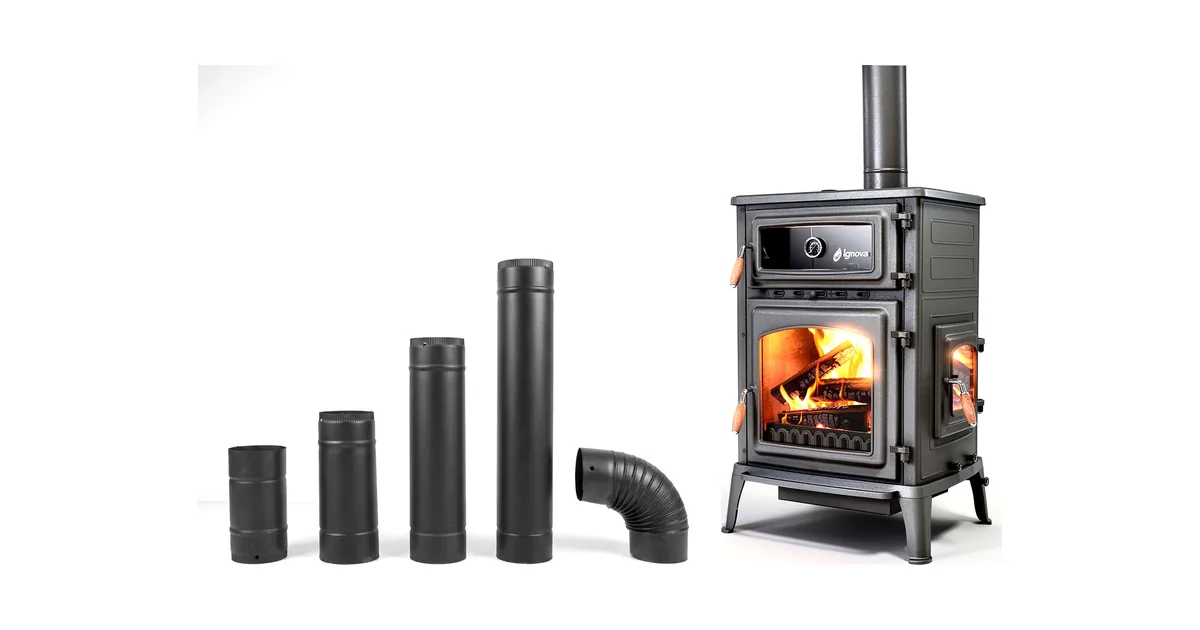
Pipes, elbows and bases: Stove accessories →
Why does a stove pipe drip? Causes and fixes
| Cause | Sign | Fix | Basis |
|---|---|---|---|
| Damp wood | Slow to catch, hisses, pipe sweats | Wood below 20% moisture; check with a moisture meter | EPA; FEMA: evaporating water uses energy and cools the smoke |
| Choked air, smouldering fire | Dripping in the morning after a stove turned down all night | Burn a lively fire; do not close the air right after adding fuel | FEMA; EPA; university bulletin |
| Long, cold pipe or flue on an outside wall | More dripping on the outside run | Keep the pipe short; an insulated run for an outside chimney | University bulletin |
| Too many elbows, weak draught | Smoke blows back, leaks at joints | Fewer elbows (TKİ: at most two), pipe of the right diameter | TKİ; university bulletin |
| Wrongly fitted or loose joint | Liquid runs out at the joint | The bottom end of each pipe goes inside the stove collar and the section below; screw the joints | Pipe manufacturer's instructions |
| Dirty pipe and flue | Draught drops, deposits grow | Check the pipe every few months in the season, have the flue cleaned yearly | University bulletin; USFA |
How do you fit a stove pipe correctly?
- Direction: In one pipe manufacturer's instructions the bottom of the pipe goes inside the stove collar. Condensate running down the inside then flows inwards at the joint, not out of it.
- Screws: The same instructions call for three sheet-metal screws equally spaced around each joint, especially with elbows. The joint spacing of 90° elbows may in some cases permit creosote leakage.
- Tape: The TKİ guide says pipe-elbow joints and the flue entry can be sealed with non-combustible aluminium tape, and that the pipe end must not be pushed too far into the flue opening.
- Slope: The horizontal run should rise towards the flue; pellet stove installation manuals ask for at least a 3% slope (pellet stove flue). For a wood or coal stove, check your manual for slope and length.
Ignova's 13 cm matt anthracite pipe comes in 25, 33, 50 and 70 cm lengths with an elbow (manufacturer): 13 cm stove pipe and elbow.
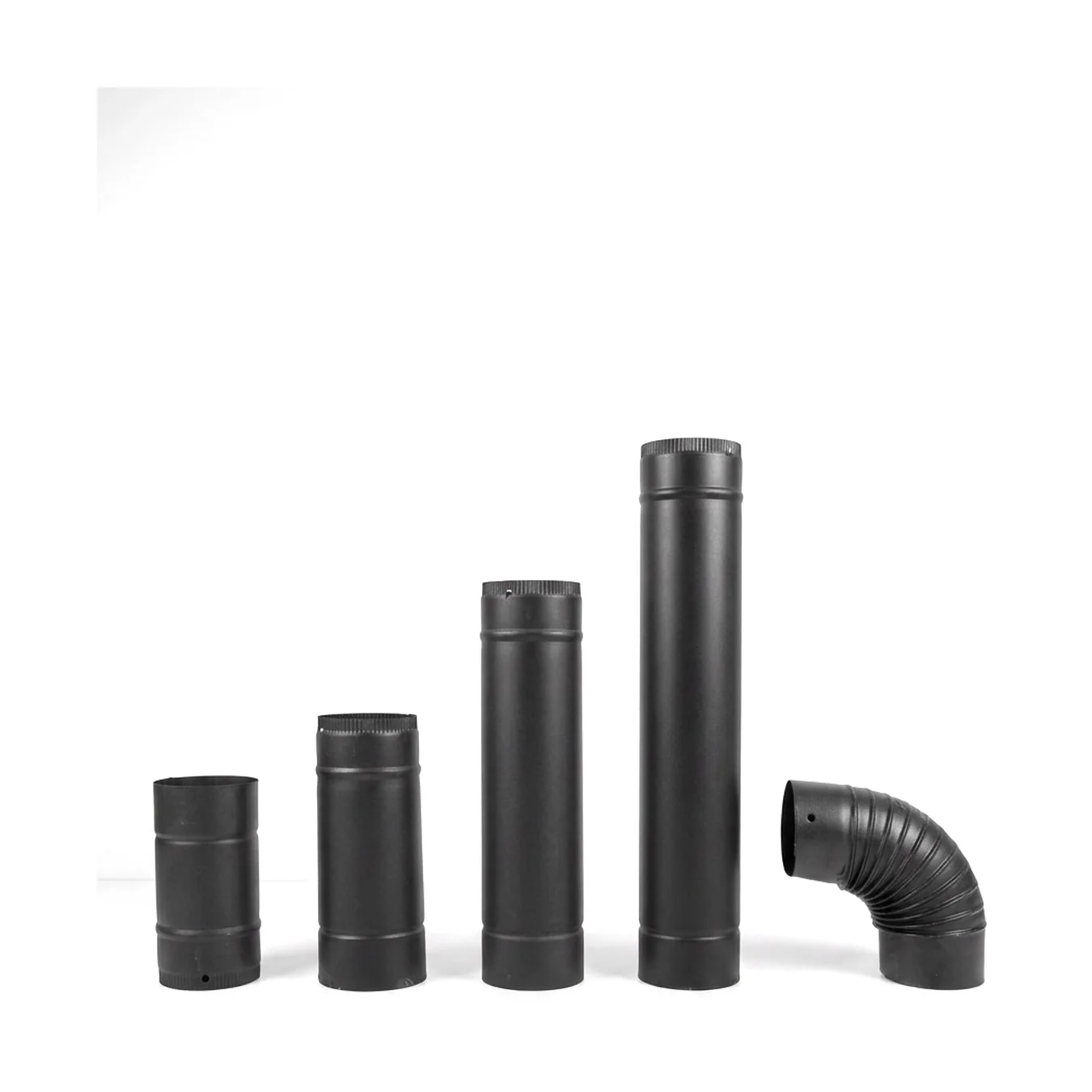
Ignova 13 cm Matte Anthracite Stove Pipe & Elbow
Source: https://ignovastove.com/urun/13-cm-mat-antrasit-soba-borusu-ve-dirsek-seti
How do you clean tar out of a stove pipe?
The university bulletin says to take the pipe sections outdoors and brush them inside with a wire brush of the same diameter; that chemical cleaners are not meant for chimneys with heavy deposits; and that burning out a chimney on purpose is a risky way to keep it clean. Wear gloves, a mask over mouth and nose, and goggles. If you notice chimney fire signs (a roar, shaking pipes), get everyone out and call 112: chimney cleaning and stove maintenance.
Why does dry wood make a difference?
According to FEMA, with unseasoned wood much of the energy first goes into driving off the water in the cells; the smoke stays cooler and more creosote builds up. The EPA wants wood below 20% moisture, checked with a moisture meter: how to tell damp wood. Firewood options are on the oak firewood and firewood pages; you can also measure the moisture of the wood you receive yourself.
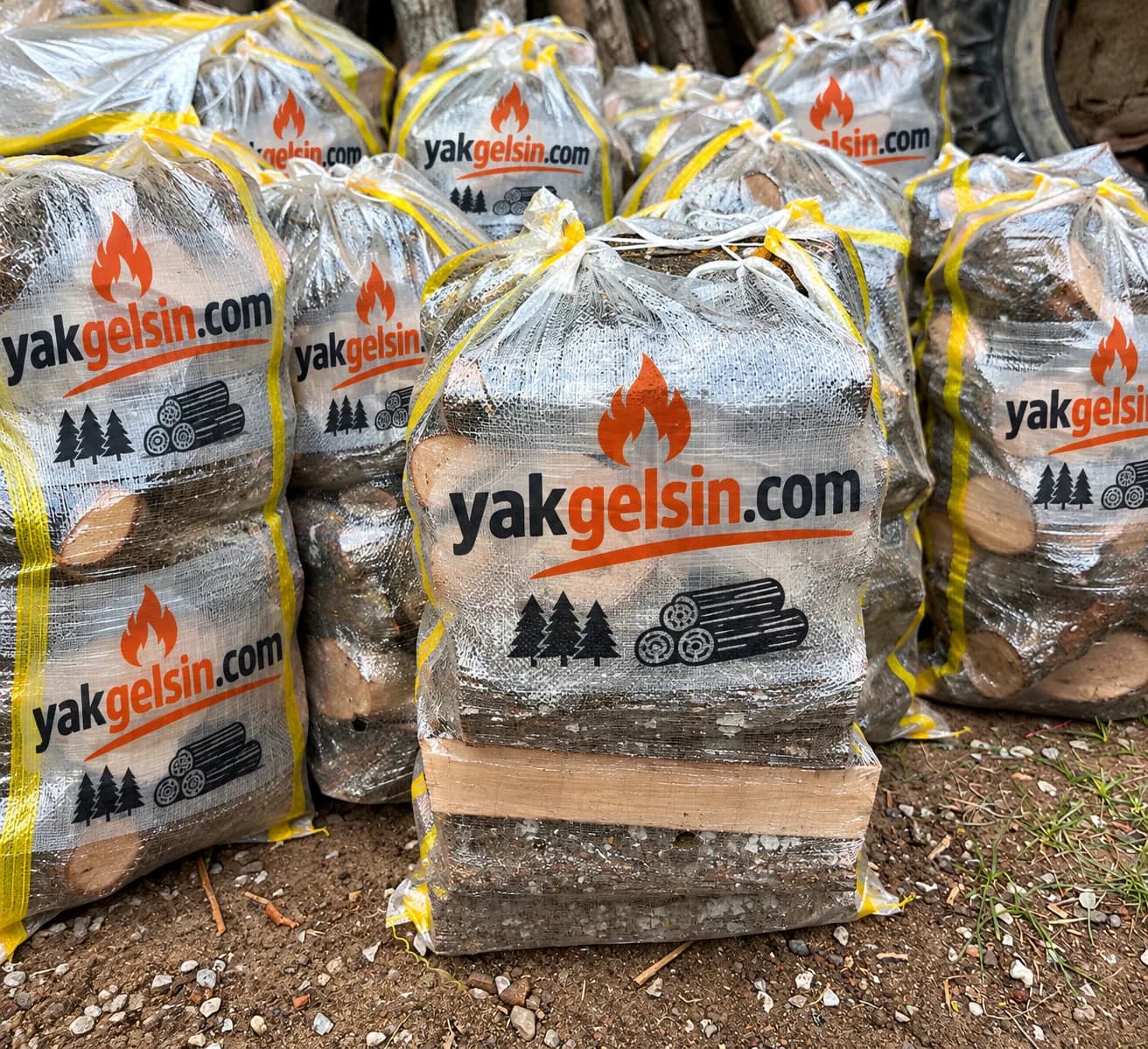
Wood species: 100% oak · Moisture content: 15% - 20% (dry)
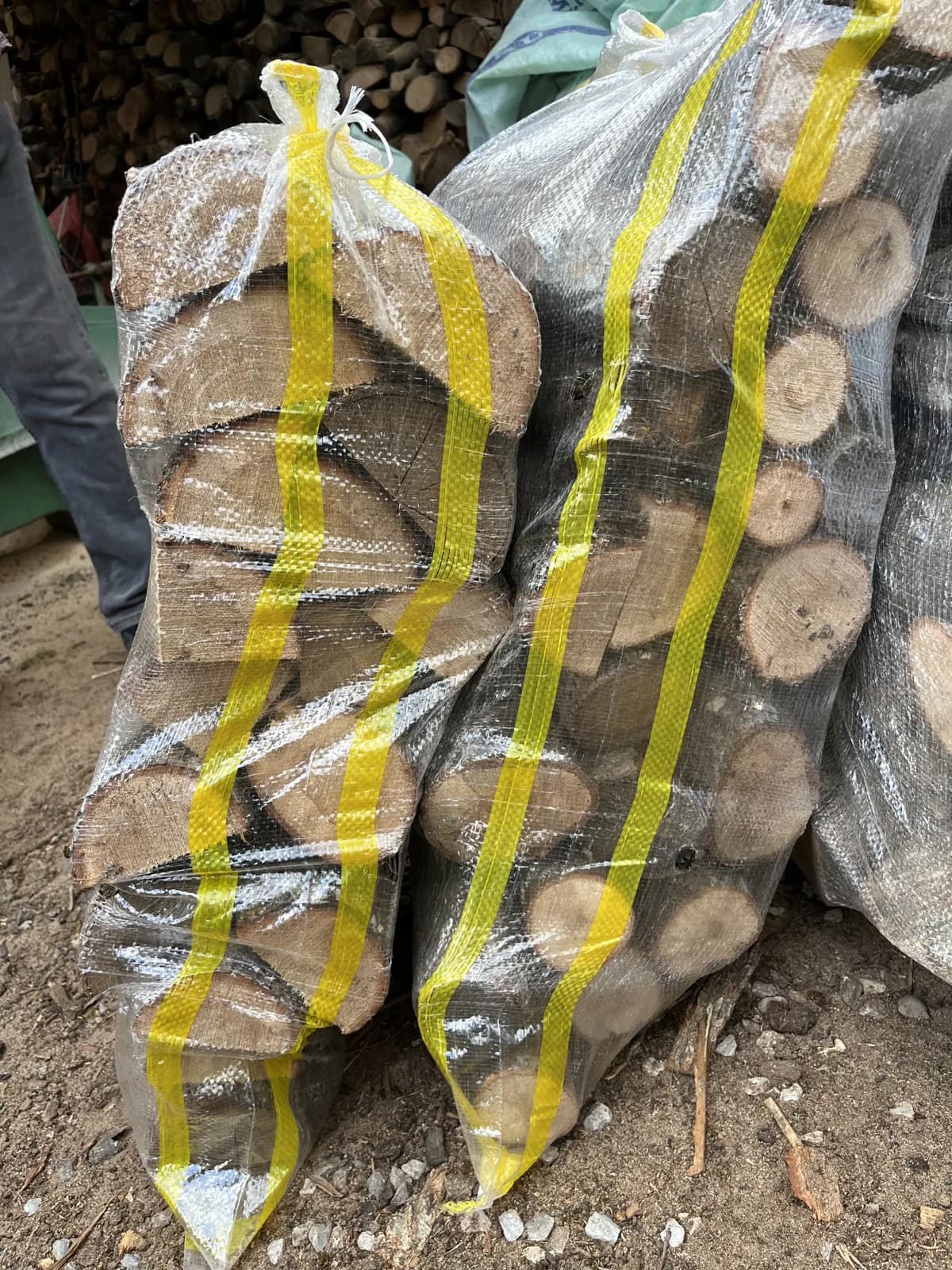
Wood species: 100% yellow oak · Bag weight: 30 kg
What does it depend on?
- Fuel moisture: The single most effective variable.
- How you burn: A low, long fire cools the flue gas.
- Pipe and flue: Length, elbows, insulation, outside walls and diameter; weak draught increases deposits.
- Maintenance frequency: With heavy use, have the flue checked mid-season too; a new stove's paint smell on first firing is a separate matter: cast-iron stove first firing.
- Stove choice: If you are thinking of a new stove, see the output you need in the stove sizing calculator.
Safety note
No stove is "smokeless"; pellets, wood and coal all produce smoke and carbon monoxide when they burn. A flue of the right diameter that draws properly and sealed pipe joints are essential. Use a carbon monoxide detector at home; with headache, dizziness or nausea, ventilate, get outside and call 112: stove gas symptoms and carbon monoxide detectors.
Frequently asked questions
Is water dripping from a stove pipe normal?
No, constant dripping shows condensation inside the pipe. Look at the moisture of the wood, how far you turn the air down and the length of the pipe.
How do you clean tar from a stove pipe?
Take the pipe down and brush it inside, outdoors, with a wire brush of the pipe's diameter. Do not try to burn off heavy deposits.
How often should a stove pipe be cleaned?
The university bulletin recommends checking pipes at least once every 2–3 months of use; have the chimney cleaned by a professional every year (USFA).
How do you seal stove pipe joints?
Fit the pipe the right way round (bottom end inside the stove collar), screw the joints and seal them with non-combustible aluminium tape (TKİ).
Does a pellet stove pipe drip too?
Yes, condensation also forms in a pellet stove's cold, uninsulated, long horizontal pipe: what a pellet stove flue should be like.
Sources: creosote condensation temperatures, causes and cleaning, Michigan State University / University of Idaho extension bulletin E-1388, "The Creosote Problem: Chimney Fires and Chimney Cleaning" (archive); FEMA, "Chimney Fire Precautions"; wood moisture, U.S. EPA Burn Wise, "Best Wood-Burning Practices"; pipe joints, DuraVent, DuraBlack installation instructions; tape, elbows and flue entry, Turkish Coal Enterprises (TKİ), “Guide to Using Coal in Stoves”; pellet stove slope, CADEL installation manual; chimney inspection, U.S. Fire Administration, "Heating Fire Safety"; pipe sizes, manufacturer page Ignova 13 cm stove pipe and elbow.
Products in this article
- Ignova 13 cm Matte Anthracite Stove Pipe & Elbow₺325 excl. VAT, ₺390 incl. VAT
- Oak Firewood (Dry)From, ₺400 excl. VAT, ₺480 incl. VAT
- Yellow Oak Stove WoodFrom, ₺400 excl. VAT, ₺480 incl. VAT
Current Price List
Starting prices for our coal, firewood and olive-pomace products: the amount excluding VAT, with the VAT-inclusive amount below it. Products without a listed price are quoted on WhatsApp.
| Product | Unit | Starting Price |
|---|---|---|
| Süper Enerji Siberian Coal | 25 kg bag | ₺375 excl. VAT, ₺450 incl. VAT |
| Domestic Soma CoalLimited stock | 25 kg bag | ₺180 excl. VAT, ₺216 incl. VAT |
| Cal Energy İmbat Coal — Grade 1Limited stock | 25 kg bag | ₺375 excl. VAT, ₺450 incl. VAT |
| Cal Energy İmbat Coal — Grade 2Limited stock | 25 kg bag | ₺350 excl. VAT, ₺420 incl. VAT |
| Cal Energy İmbat Nut Coal — Grade 1Limited stock | 25 kg bag | ₺375 excl. VAT, ₺450 incl. VAT |
| Cal Energy İmbat Nut Coal — Grade 2Limited stock | 25 kg bag | ₺350 excl. VAT, ₺420 incl. VAT |
| Central Heating Coal (Walnut Size)Made to order | — | Ask on WhatsApp |
| Central Heating Coal (Nut Size)Made to order | — | Ask on WhatsApp |
| Block Coal (Large Lump)Made to order | — | Ask on WhatsApp |
| Domestic Lignite Coal (Lump)Made to order | 25 kg bag | ₺160 excl. VAT, ₺192 incl. VAT |
| Root Coal (Domestic)Made to order | 40 kg sack | ₺290 excl. VAT, ₺348 incl. VAT |
| Pressed Coal (Briquettes)Made to order | — | Ask on WhatsApp |
| Oak Firewood (Dry) | 1 sack (20-25 kg) | ₺400 excl. VAT, ₺480 incl. VAT |
| Yellow Oak Stove Wood | Bagged — 30 kg | ₺400 excl. VAT, ₺480 incl. VAT |
| Red Oak Stove Wood | Bagged — 28 kg | ₺400 excl. VAT, ₺480 incl. VAT |
| Oak Firewood (6 Months Seasoned) | 1 sack (20-25 kg) | ₺400 excl. VAT, ₺480 incl. VAT |
| Yellow Oak Firewood (6 Months Seasoned) | 1 sack (20-25 kg) | ₺400 excl. VAT, ₺480 incl. VAT |
| 100% Pine Wood Pellets (ENplus A1) | 15 kg bag | ₺200 excl. VAT, ₺240 incl. VAT |
| Hazelnut Shell FuelMade to orderPrepaid | — | Ask on WhatsApp |
| Pine Kindling and Wood Pieces | Bag (17-23 kg) | ₺250 excl. VAT, ₺300 incl. VAT |
| Pirina (Olive Pit Fuel)Prepaid | 25 kg sack | ₺225 excl. VAT, ₺270 incl. VAT |
The top line of each price excludes VAT (+ VAT); the VAT-inclusive amount below it is what you pay. Prices can change. Message us on WhatsApp for the current price and a quote including delivery.
Ask for a Price on WhatsApp