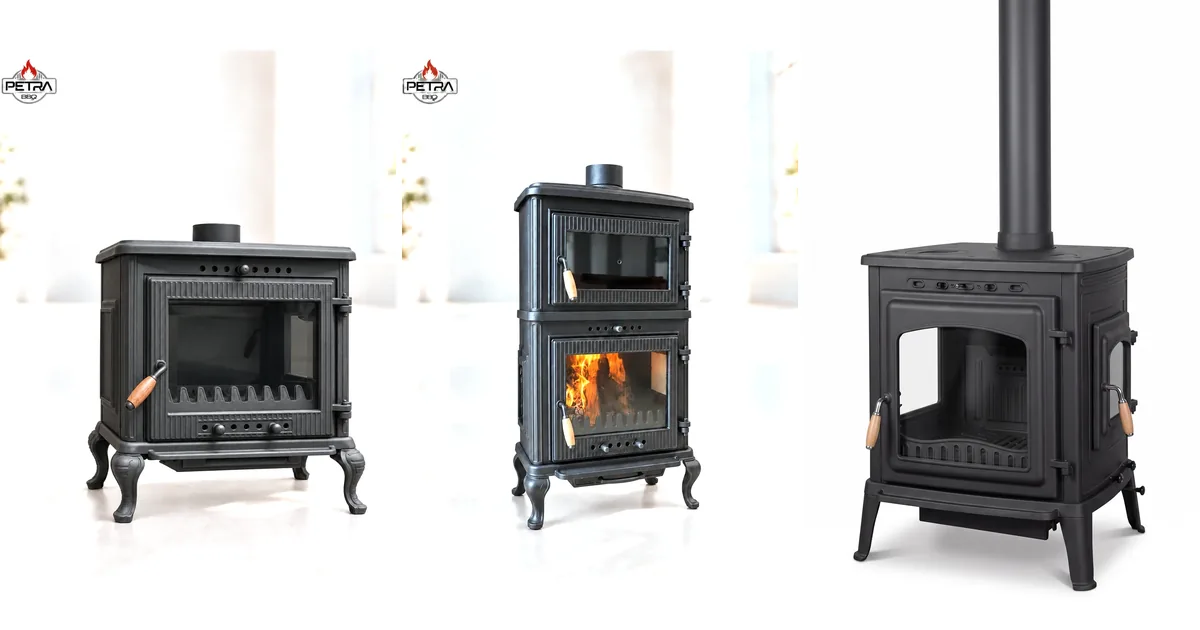
How Do You Light a Cast-Iron Fireplace Stove with Wood? Top-Down Lighting, Air and Reloading
Prepared by: the Yak Gelsin teamLast updated:
Short answer: light a glass-door cast-iron fireplace stove top-down: lay 2 small logs on the base, 5 pieces of kindling across them, 4 more crosswise with 2 firelighters in the gaps and 5 on top. Light the firelighters, close the door, and close the primary air once the stove top is warm. Burn dry wood under 20% moisture and reload onto a hot ember bed.
Air control positions and the "lighting setting" differ from model to model, so check your stove's documents. Coal needs a different layout: how to light a coal stove top-down.
Models and current prices: Cast-iron stove prices →
What should you check before lighting?
- Ash: The EPA's archived Burn Wise guide recommends leaving about 2.5 cm (1 inch) of ash to insulate the coals; remove the rest once cold.
- Air: HETAS asks for the air controls to be set to the manufacturer's settings when lighting.
- Wood: HETAS's "Ready to Burn" mark shows moisture of no more than 20%; the EPA also says wood burns best below 20 percent moisture. More: how to spot damp wood.
- New stove: first firing of a cast-iron stove.
How do you light a cast-iron fireplace stove top-down with wood?
In the layout from HETAS, the UK body for solid-fuel appliances, logs sit at the bottom and kindling in the middle; the fire burns downwards and the burning kindling drops between the logs.
| Step | What you do | Air and door | What you see |
|---|---|---|---|
| 1. Base | Lay 2 small logs across the fire bed | Controls in lighting position | — |
| 2. Kindling | 5 across, 4 at 90 degrees with 2 firelighters in the gaps, 5 more on top | — | A three-layer kindling stack |
| 3. Lighting | Light the firelighters and close the door | Air at the manufacturer's setting | Flame starts at the very top |
| 4. Wait | Leave the kindling alone | No changes until the stove top is warm | Burning kindling drops between the logs |
| 5. Primary air | Once the top is warm, close the primary air | Primary closed | The logs catch |
| 6. Steady burn | When the logs burn well, adjust the burn rate and add logs as needed | Adjust with upper air | Steady flames |
The EPA's archived guide says the door can stay open for a few minutes, but do not leave the room until it is closed. An example manufacturer's manual for a wood cookstove (Elmira Fireview) says not to run the stove with the doors open except for five to ten minutes after lighting: an open door can over-fire it through excessive draft.
When does the traditional (bottom-up) method make sense?
If the top-down stack does not fit, HETAS's traditional method: crumpled newspaper or firelighters, a triangle of kindling with air gaps, then bigger logs once the kindling is well alight. An example manufacturer's manual (ESSE Ironheart, a wood cookstove) suggests three stages: finger-thick pine kindling, then logs about 7.5 cm (3 inches) across, then larger pieces.
How do you set the air: primary or secondary?
There are usually two air paths: lower (primary) air under the grate and upper (secondary) air in front of the glass or from above. In the HETAS layout primary air is closed once the stove top is warm; the ESSE example manual also says to control a wood fire with secondary air and keep primary air closed.
Do not starve it either: the EPA says that for most appliances a smoldering fire is not safe or efficient, and smoke usually means the fire needs more air. If the glass blackens: why stove glass gets sooty.
If any part of the stove begins to glow, it is being over-fired: the ESSE example manual says to stop use immediately and let it cool.
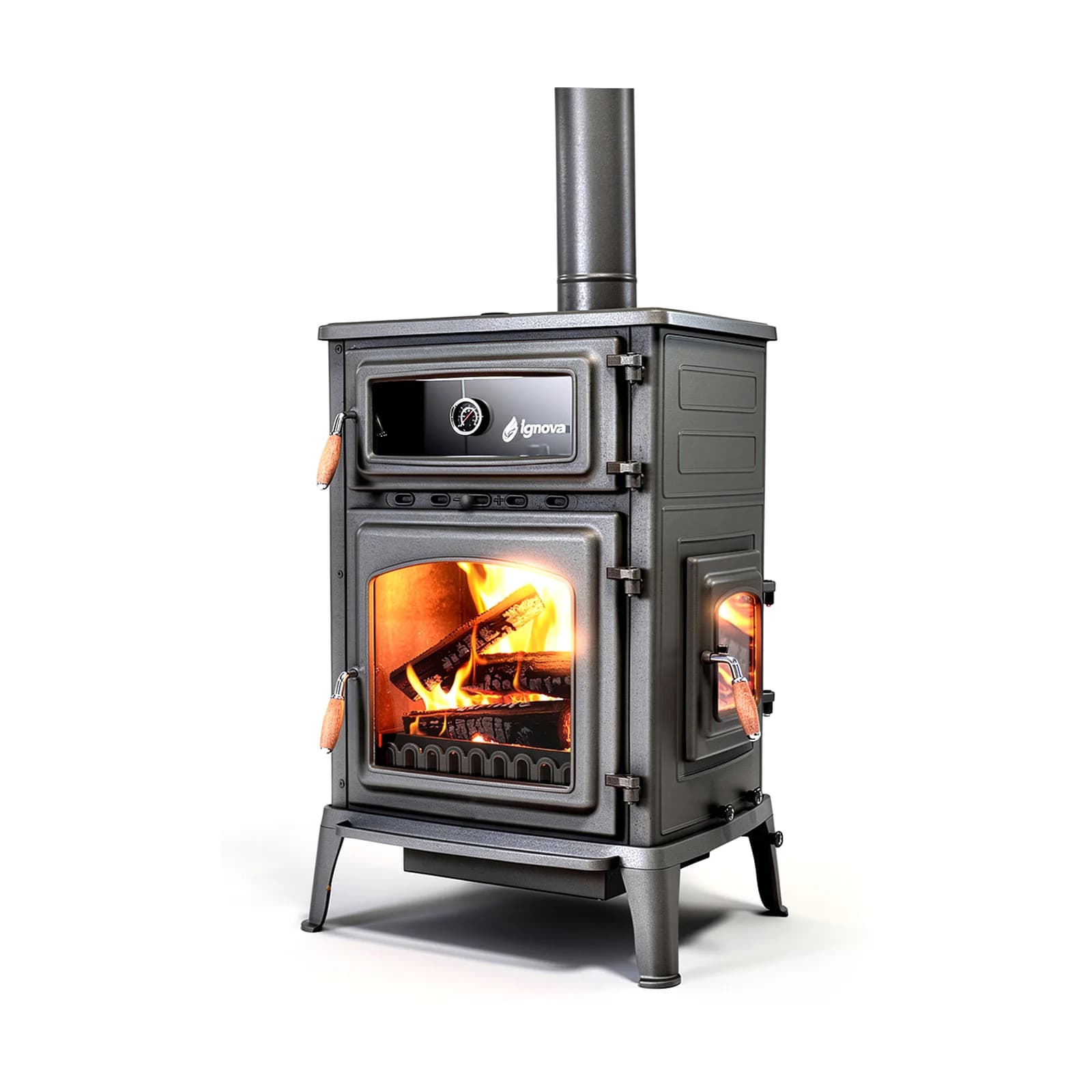
Ignova Impera V2 Cast-Iron Fireplace Stove with Oven
Heat output: 14 kW · Heating area: 70–140 m²
When and how do you add wood?
- While there are embers: The example manual (Elmira Fireview) recommends reloading while the firebox is hot with a good ember bed, mixing smaller pieces with split logs.
- Open the door slowly: The EPA asks you to open the door slowly to reduce the chance of wood smoke spilling into the room.
- Valley of coals: The EPA suggests making a valley of coals and laying the wood across it.
- Leave gaps: Keep space between pieces for air flow (EPA).
- Afterwards: Once the new wood catches, reset the air.
Which wood, and what length?
For species differences: oak, beech or pine. For kindling the ESSE example manual recommends pine. The firebox sets the length: logs should lie without pressing on the door or glass; check your stove's dimensions in its documents.
The ESSE example manual says freshly cut wood can hold over 50% water in its cells, so it is hard to light, smoulders and builds up more creosote in the chimney. Seasonal quantity: fuel requirement calculator; fuel choice: wood or coal in a stove; types: firewood prices.
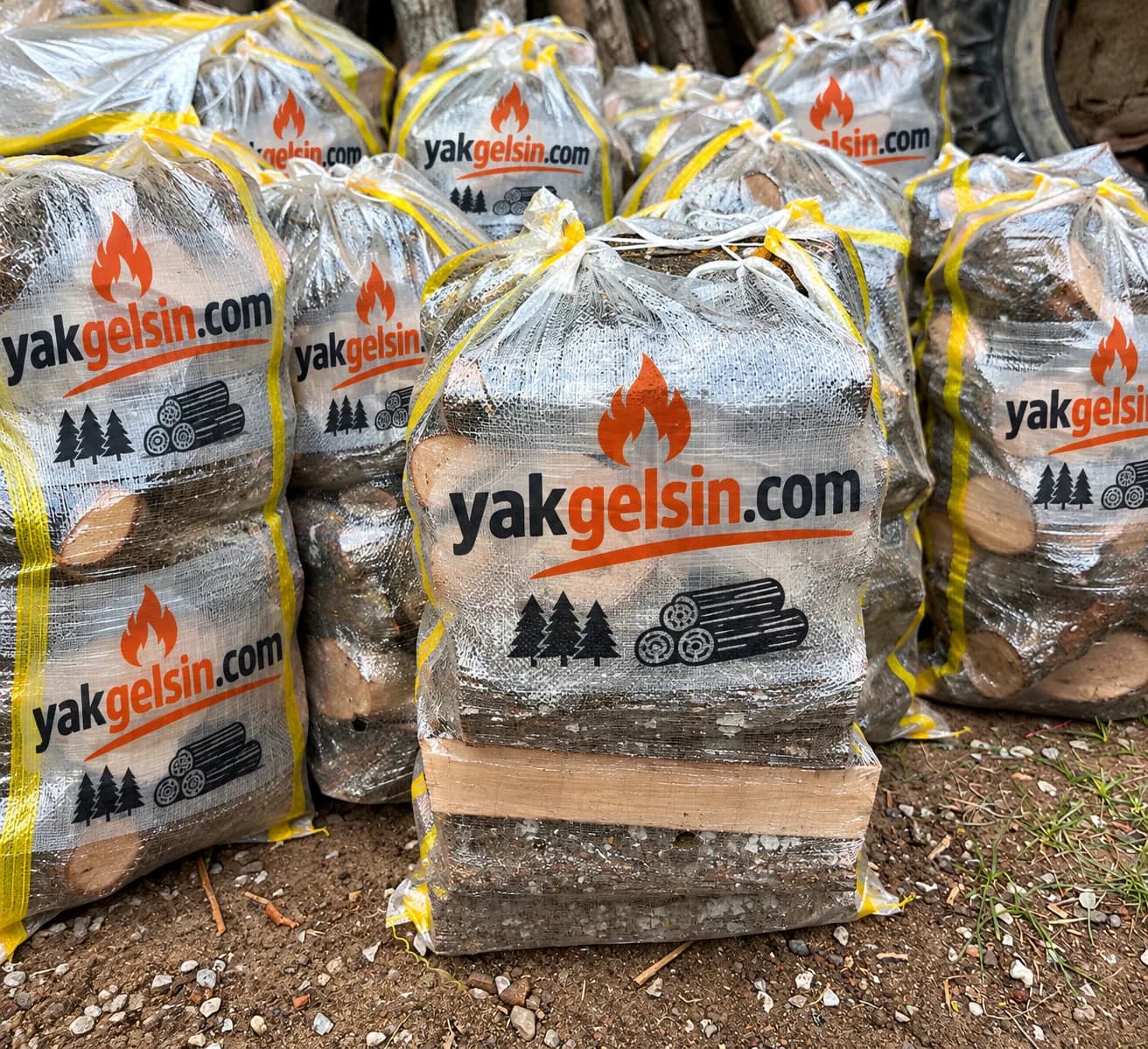
Wood species: 100% oak · Moisture content: 15% - 20% (dry)
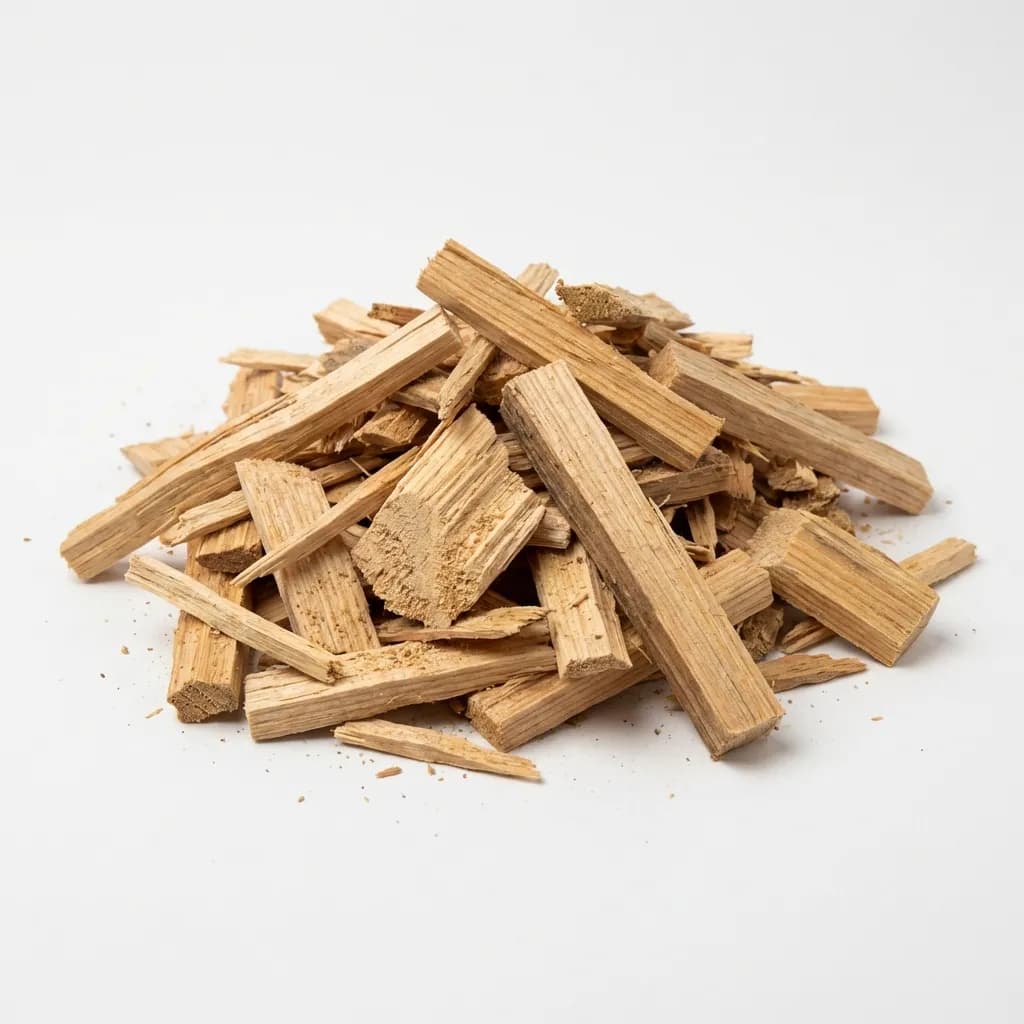
Wood species: 100% pine · Use: Kindling / lighting the fire
What must you never burn in a cast-iron fireplace stove?
The EPA list: household trash, cardboard and plastics; painted, coated or pressure-treated wood; plywood, particle board and glued wood; wet, rotted or mouldy wood; rubber. Never start a fire with gasoline, kerosene or charcoal starter; the EPA recommends only newspaper, dry kindling and natural fire starters.
How does the fire die down, and what about the ash?
Stop adding wood; the fire turns to embers and goes out on its own. The EPA says to remove ash once cooled, not hot, and keep it in a metal container away from the house and anything flammable.
What does it depend on?
- Wood moisture: Wood above 20% moisture is hard to light and smoky.
- Chimney draw: chimney cleaning and stove maintenance.
- Model: Air controls, lighting setting, firebox size.
- Loading: Ember bed, gaps between logs and piece size.
- Stove type: range cooker or cast-iron fireplace stove; range cooker oven.
Safety note
No fuel is smokeless; burning wood also produces carbon monoxide. HETAS warns that slumbering a stove at minimal output overnight causes incomplete combustion, creosote build-up and higher carbon monoxide, and a cooling flue can lose draw and let gases into the room. Fit a carbon monoxide detector; with headache, dizziness or nausea, ventilate, get outside and call 112: stove gas symptoms.
Frequently asked questions
Can you burn wood and coal together in a cast-iron fireplace stove?
The ESSE example manual describes secondary air for wood and primary air for other solid fuels; do not mix them unless your documents allow it.
Can a cast-iron fireplace stove be run with the door open?
No. The example manual says doors stay closed except for five to ten minutes after lighting.
Why does the stove smoke or light poorly?
Usually damp wood or too little air. The EPA says smoke usually means the fire needs more air; keep wood below 20% moisture.
Should the ash be emptied before every fire?
Not completely. The EPA suggests leaving about 2.5 cm of ash; remove the rest once cold.
Sources: HETAS, "How to light a fire" and "Top tips for using your wood burner responsibly and safely"; U.S. EPA Burn Wise (archived), "Best Wood-Burning Practices" and "Tips for a Better Burn"; example manufacturer's manuals ESSE Ironheart and Elmira Fireview
Products in this article
- Ignova Impera V2 Cast-Iron Fireplace Stove with Oven₺30,000 excl. VAT, ₺36,000 incl. VAT
- Oak Firewood (Dry)From, ₺400 excl. VAT, ₺480 incl. VAT
- Pine Kindling and Wood PiecesFrom, ₺250 excl. VAT, ₺300 incl. VAT
Current Price List
Starting prices for our coal, firewood and olive-pomace products: the amount excluding VAT, with the VAT-inclusive amount below it. Products without a listed price are quoted on WhatsApp.
| Product | Unit | Starting Price |
|---|---|---|
| Süper Enerji Siberian Coal | 25 kg bag | ₺375 excl. VAT, ₺450 incl. VAT |
| Domestic Soma CoalLimited stock | 25 kg bag | ₺180 excl. VAT, ₺216 incl. VAT |
| Cal Energy İmbat Coal — Grade 1Limited stock | 25 kg bag | ₺375 excl. VAT, ₺450 incl. VAT |
| Cal Energy İmbat Coal — Grade 2Limited stock | 25 kg bag | ₺350 excl. VAT, ₺420 incl. VAT |
| Cal Energy İmbat Nut Coal — Grade 1Limited stock | 25 kg bag | ₺375 excl. VAT, ₺450 incl. VAT |
| Cal Energy İmbat Nut Coal — Grade 2Limited stock | 25 kg bag | ₺350 excl. VAT, ₺420 incl. VAT |
| Central Heating Coal (Walnut Size)Made to order | — | Ask on WhatsApp |
| Central Heating Coal (Nut Size)Made to order | — | Ask on WhatsApp |
| Block Coal (Large Lump)Made to order | — | Ask on WhatsApp |
| Domestic Lignite Coal (Lump)Made to order | 25 kg bag | ₺160 excl. VAT, ₺192 incl. VAT |
| Root Coal (Domestic)Made to order | 40 kg sack | ₺290 excl. VAT, ₺348 incl. VAT |
| Pressed Coal (Briquettes)Made to order | — | Ask on WhatsApp |
| Oak Firewood (Dry) | 1 sack (20-25 kg) | ₺400 excl. VAT, ₺480 incl. VAT |
| Yellow Oak Stove Wood | Bagged — 30 kg | ₺400 excl. VAT, ₺480 incl. VAT |
| Red Oak Stove Wood | Bagged — 28 kg | ₺400 excl. VAT, ₺480 incl. VAT |
| Oak Firewood (6 Months Seasoned) | 1 sack (20-25 kg) | ₺400 excl. VAT, ₺480 incl. VAT |
| Yellow Oak Firewood (6 Months Seasoned) | 1 sack (20-25 kg) | ₺400 excl. VAT, ₺480 incl. VAT |
| 100% Pine Wood Pellets (ENplus A1) | 15 kg bag | ₺200 excl. VAT, ₺240 incl. VAT |
| Hazelnut Shell FuelMade to orderPrepaid | — | Ask on WhatsApp |
| Pine Kindling and Wood Pieces | Bag (17-23 kg) | ₺250 excl. VAT, ₺300 incl. VAT |
| Pirina (Olive Pit Fuel)Prepaid | 25 kg sack | ₺225 excl. VAT, ₺270 incl. VAT |
The top line of each price excludes VAT (+ VAT); the VAT-inclusive amount below it is what you pay. Prices can change. Message us on WhatsApp for the current price and a quote including delivery.
Ask for a Price on WhatsApp