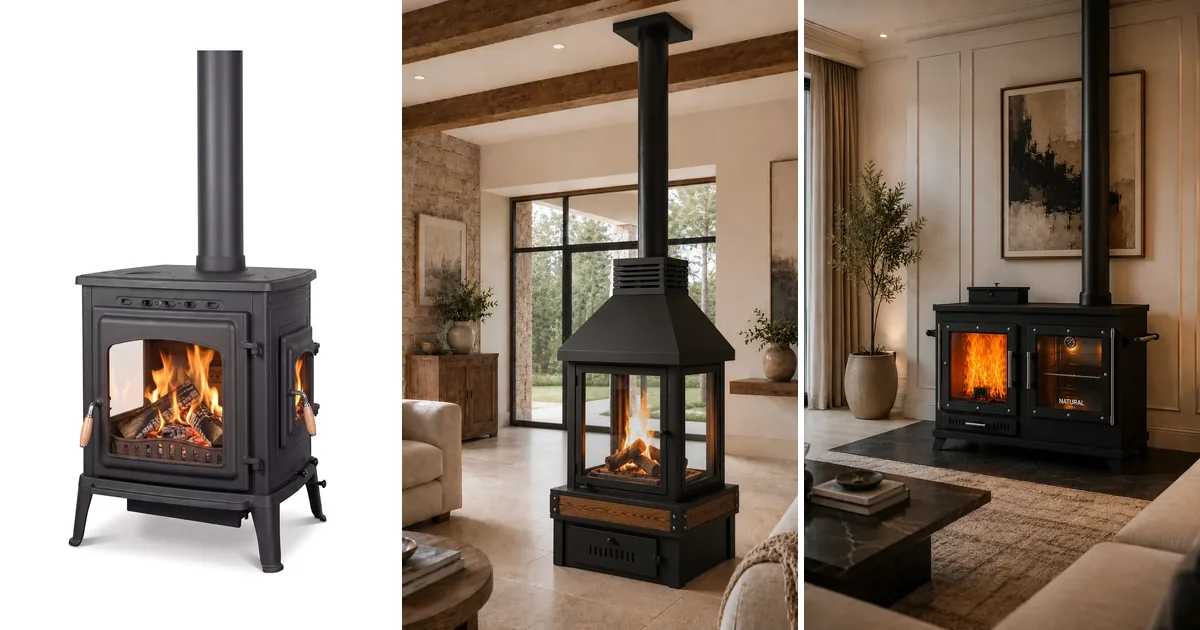
Why Does Stove and Fireplace Glass Get Sooty? How Do You Clean It?
Prepared by: the Yak Gelsin teamLast updated:
Short answer: stove glass blackens mainly through incomplete combustion: too little air, wood above 20% moisture, or a fire smouldering on low air. To prevent it, burn dry wood and let the fire establish before closing the air. Clean only when the glass is fully cool, with damp newspaper and cold ash or a non-abrasive stove-glass cleaner.
Glass-door cast iron stoves and current prices: Cast iron stove models →
This guide is for glass-door cast iron stoves and fireplaces burning wood and coal; air control names and positions vary by model.
Why does stove glass get sooty?
Soot is unburnt fuel particles. HETAS, the UK body that certifies solid-fuel appliances, explains that incomplete combustion happens when the fire has insufficient oxygen, and lists it among the causes of dirty glass. The same source notes that burning wet wood (moisture content higher than 20%) not only makes the glass dirty but also lowers efficiency.
An example manufacturer's manual (ESSE Ironheart, a wood-fired cooking stove) gives another cause: loading a large amount of wood at once lowers the temperature inside, the gases from the wood become too cool to burn, and the smoke covers the inside, including the glass, with soot. The fix: open the air to raise the temperature before reloading, and keep it open until the moisture is driven out.
What is airwash, and why is it not always enough?
Many modern stoves have an air curtain that sends clean air down the inside of the glass. An example manufacturer's manual (Elmira Fireview) says the secondary air provides a "wash" over the glass to reduce smoke build-up. Ignova's Impera product page likewise says its airwash helps reduce soot on the glass. But airwash only works while that air control is open. If the top air is shut right down, or the fuel is wet, the curtain cannot keep the glass clean.
Which air should stay open for wood and for coal?
An example manufacturer's manual (ESSE Ironheart) says to control a wood fire with the secondary (top) air and keep the primary (bottom) air closed. For fuels that need air from below, such as coal, the primary air is used and the secondary is kept open where possible to stop the window sooting up. For coal, see how to light a coal stove; for wood, see how to light a cast iron stove with wood.
| Symptom | Likely cause | What to do |
|---|---|---|
| Glass blackens every burn, wood hisses | Wood moisture above 20% | Check with a moisture meter, burn wood below 20% |
| Glass blackens overnight or on low settings | Air turned down too far, fire smouldering | Open the air to revive the fire; EPA says a smouldering fire is not safe or efficient for most appliances |
| Glass soots up after adding wood | Too much wood at once, firebox cooled | Open the air before reloading, add wood a little at a time (example manual) |
| Only one corner blackens | Wood close to or touching the glass, door seal may leak | Load wood away from the glass, have the seal checked by service |
| Everything is right but glass still blackens | Weak chimney draught | Have the chimney and flue pipe swept |
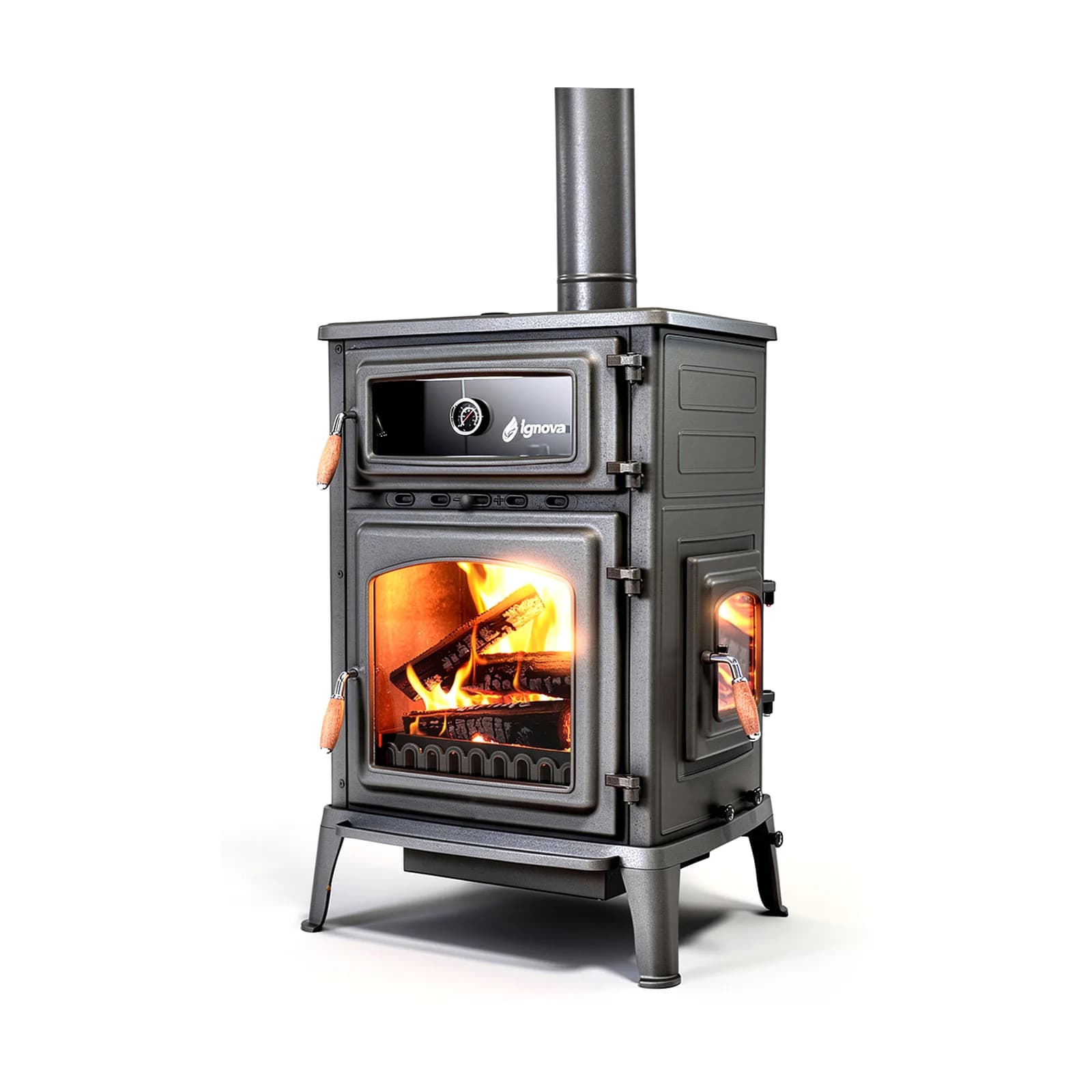
Ignova Impera V2 Cast-Iron Fireplace Stove with Oven
Heat output: 14 kW · Heating area: 70–140 m²
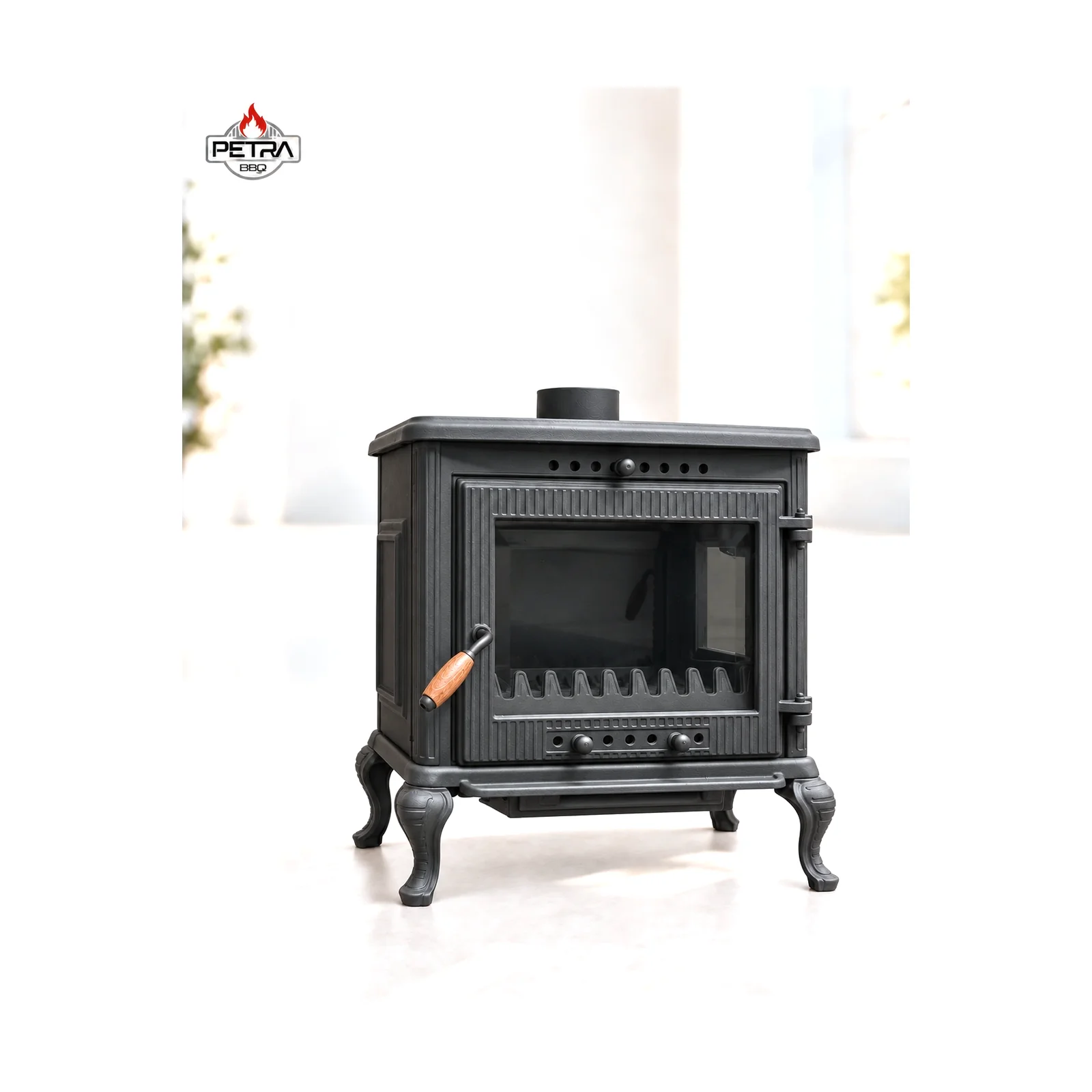
Natural Stove 36h Cast-Iron Fireplace-Style Wood & Coal Stove
Power range: 6–8 kW · Heating area: 50–60 m²
How do you stop stove glass going black?
- Burn dry wood. EPA Burn Wise says wood burns best below 20% moisture; test it with a moisture meter before burning and season it for at least 6 months. To spot damp wood, see how to dry firewood.
- Start hot. Do not close the air before the fire is established; a cold, smoky start dirties the glass in the first minutes.
- Keep wood away from the glass. An example manual (Fireview) says not to let the fuel or fire burn against the glass, as this typically cracks it.
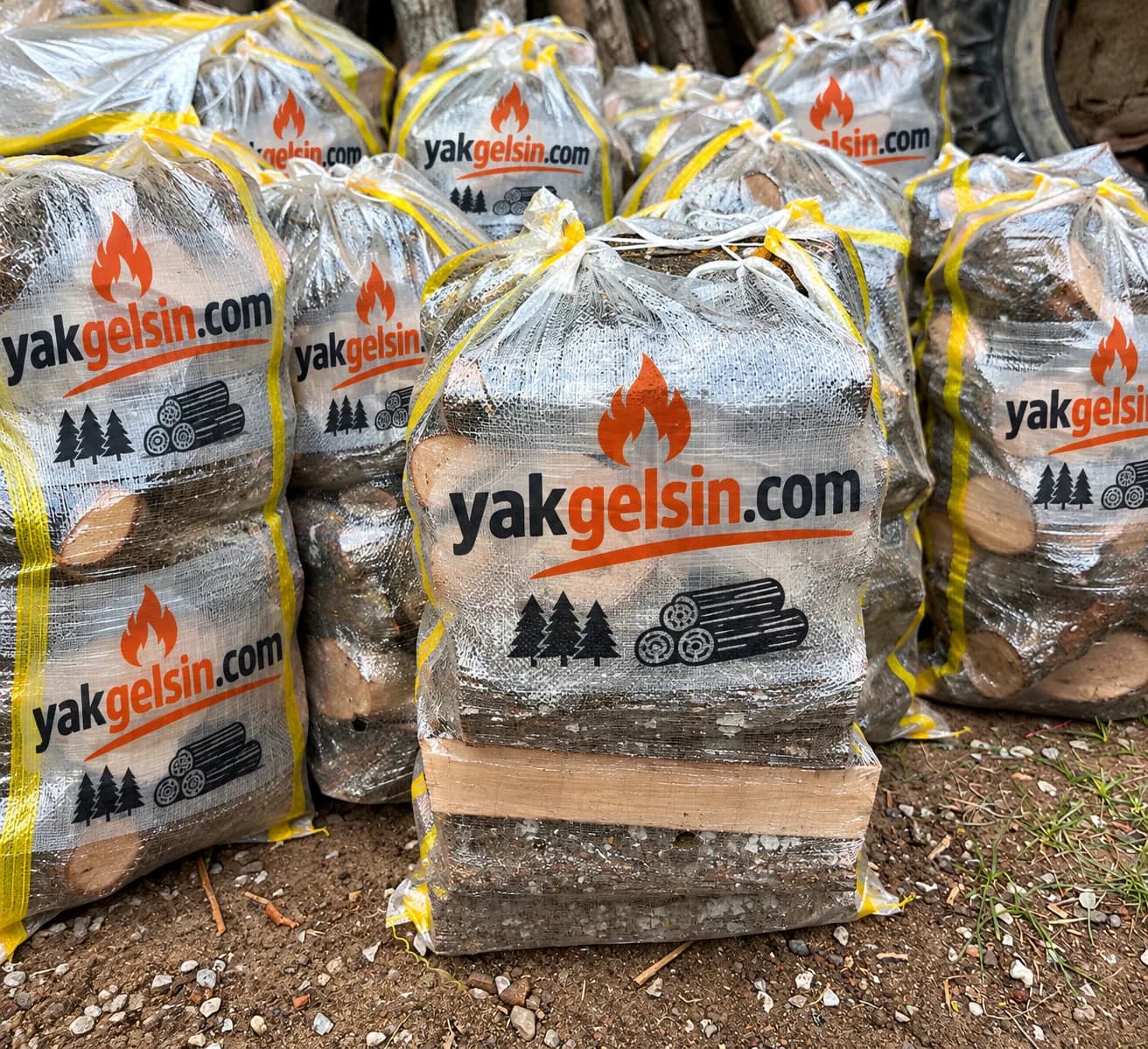
Wood species: 100% oak · Moisture content: 15% - 20% (dry)
How do you clean sooty stove glass?
Let the glass cool completely first. HETAS asks that the glass be cool to the touch before cleaning to avoid the risk of it shattering, and ceramic glass maker SCHOTT says fire-viewing panels should only be cleaned after they have cooled down. An example manual (Fireview) says not to clean the glass when hot and warns against splashing liquids on hot glass. Then choose one method:
- Damp newspaper and ash: HETAS suggests dipping the paper in water and cool stove ash, then scrubbing gently until the glass clears. The ESSE manual also says a ball of dampened newspaper passed through the ash can be used.
- Stove glass cleaner: the Fireview manual recommends low-alkaline commercial stove glass cleaners. HETAS also mentions ceramic cooker cleaner with a non-scratch sponge.
- Dry wiper: SCHOTT says its dry wiper needs no cleaning agent or water on non-coated panels and recommends wiping at least 2 times a week if the fireplace is used every day. It adds that it must not be used on a coated surface.
What not to do: HETAS says not to use sharp or abrasive materials; ESSE says abrasive or chemically aggressive products can weaken or stain the glass.
What if the glass cracks or breaks?
An example manufacturer's manual (Fireview) says never to operate the stove with broken or cracked glass and to replace it only with glass supplied by the manufacturer or distributor; the same manual states that glass breakage is not covered by warranty. Ceramic glass withstands very high temperatures; Ignova rates the Impera's glass at 800 °C. Even so, glass is excluded from warranty by many makers; check your own documents.
Why does pellet stove glass go black?
In a pellet stove, fast blackening usually points to a clogged burn pot, dirty flue passages or damp pellets. For full maintenance, see pellet stove maintenance.
What does it depend on?
- Wood moisture and species
- Air control settings and whether the stove has airwash
- How much fuel is loaded at once
- Chimney draught and a clean flue pipe
- Condition of the door and glass seals
Soot weakens the draught: chimney sweeping and stove maintenance. If black liquid drips from pipe joints, the cause is probably the same: why stove pipes drip tar. Work out your season's wood with the fuel needs calculator.
Safety: no fuel is smokeless. Sooty glass can be a sign of incomplete combustion, and therefore of carbon monoxide. Carbon monoxide is colourless and odourless; if you feel a headache, dizziness or weakness, leave the room at once and call 112, the emergency number in Türkiye. Use a detector in any home with a stove: carbon monoxide detectors and stove gas symptoms.
Frequently asked questions
Can I wipe stove glass while it is hot?
No. HETAS and SCHOTT say to clean the glass only once it has cooled; an example manual (Fireview) warns that splashing liquid on hot glass can break it.
Do anti-soot sprays for stove glass work?
We found no independent source confirming this. The lasting fix is dry wood and correct air settings; as a cleaner, use a product approved by the stove or glass maker.
The glass has gone cloudy and will not come clean. Why?
Abrasive or chemically aggressive products can weaken or stain the glass (ESSE). The glass may then need replacing; fit only the manufacturer's glass.
Can I use the stove with cracked glass?
No. An example manual (Fireview) forbids it; fit only the manufacturer's glass.
Sources: HETAS, keeping stove glass clean; EPA Burn Wise, best wood-burning practices; SCHOTT ROBAX Dry Wiper; ESSE Ironheart manual; Elmira Fireview manual; Ignova Impera product page; Turkish Ministry of Health, CO poisoning.
Products in this article
- Ignova Impera V2 Cast-Iron Fireplace Stove with Oven₺30,000 excl. VAT, ₺36,000 incl. VAT
- Natural Stove 36h Cast-Iron Fireplace-Style Wood & Coal Stove₺22,916.67 excl. VAT, ₺27,500 incl. VAT
- Oak Firewood (Dry)From, ₺400 excl. VAT, ₺480 incl. VAT
Current Price List
Starting prices for our coal, firewood and olive-pomace products: the amount excluding VAT, with the VAT-inclusive amount below it. Products without a listed price are quoted on WhatsApp.
| Product | Unit | Starting Price |
|---|---|---|
| Süper Enerji Siberian Coal | 25 kg bag | ₺375 excl. VAT, ₺450 incl. VAT |
| Domestic Soma CoalLimited stock | 25 kg bag | ₺180 excl. VAT, ₺216 incl. VAT |
| Cal Energy İmbat Coal — Grade 1Limited stock | 25 kg bag | ₺375 excl. VAT, ₺450 incl. VAT |
| Cal Energy İmbat Coal — Grade 2Limited stock | 25 kg bag | ₺350 excl. VAT, ₺420 incl. VAT |
| Cal Energy İmbat Nut Coal — Grade 1Limited stock | 25 kg bag | ₺375 excl. VAT, ₺450 incl. VAT |
| Cal Energy İmbat Nut Coal — Grade 2Limited stock | 25 kg bag | ₺350 excl. VAT, ₺420 incl. VAT |
| Central Heating Coal (Walnut Size)Made to order | — | Ask on WhatsApp |
| Central Heating Coal (Nut Size)Made to order | — | Ask on WhatsApp |
| Block Coal (Large Lump)Made to order | — | Ask on WhatsApp |
| Domestic Lignite Coal (Lump)Made to order | 25 kg bag | ₺160 excl. VAT, ₺192 incl. VAT |
| Root Coal (Domestic)Made to order | 40 kg sack | ₺290 excl. VAT, ₺348 incl. VAT |
| Pressed Coal (Briquettes)Made to order | — | Ask on WhatsApp |
| Oak Firewood (Dry) | 1 sack (20-25 kg) | ₺400 excl. VAT, ₺480 incl. VAT |
| Yellow Oak Stove Wood | Bagged — 30 kg | ₺400 excl. VAT, ₺480 incl. VAT |
| Red Oak Stove Wood | Bagged — 28 kg | ₺400 excl. VAT, ₺480 incl. VAT |
| Oak Firewood (6 Months Seasoned) | 1 sack (20-25 kg) | ₺400 excl. VAT, ₺480 incl. VAT |
| Yellow Oak Firewood (6 Months Seasoned) | 1 sack (20-25 kg) | ₺400 excl. VAT, ₺480 incl. VAT |
| 100% Pine Wood Pellets (ENplus A1) | 15 kg bag | ₺200 excl. VAT, ₺240 incl. VAT |
| Hazelnut Shell FuelMade to orderPrepaid | — | Ask on WhatsApp |
| Pine Kindling and Wood Pieces | Bag (17-23 kg) | ₺250 excl. VAT, ₺300 incl. VAT |
| Pirina (Olive Pit Fuel)Prepaid | 25 kg sack | ₺225 excl. VAT, ₺270 incl. VAT |
The top line of each price excludes VAT (+ VAT); the VAT-inclusive amount below it is what you pay. Prices can change. Message us on WhatsApp for the current price and a quote including delivery.
Ask for a Price on WhatsApp