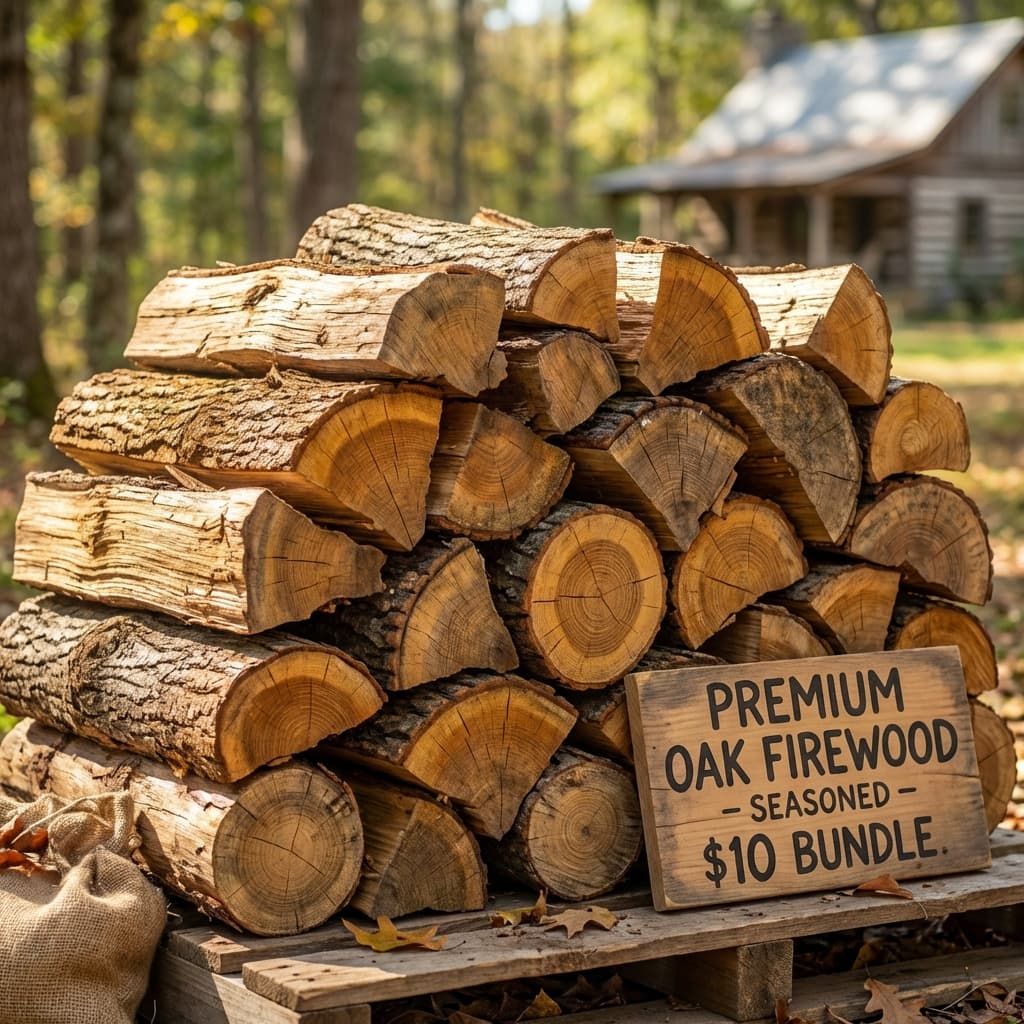
Buying firewood takes more knowledge than buying coal, because “firewood” is not a single product. The species, its density and how long it has been seasoned decide how much heat you get, how often you feed the stove and how much soot builds up in your flue. Here is how the three most requested species compare, and why seasoning time matters more than price.
What Determines a Log's Heat?
Two things: density and moisture. Per kilogram, dry wood of different species does not vary hugely in heat value; the real difference is by volume. A dense hardwood packs far more material into the same space — so a stere of oak yields far more heat than a stere of pine. Since firewood is sold by volume, density goes straight to your wallet.
The second factor is moisture, and it is unforgiving: the water in the wood consumes part of the heat your stove produces as it boils off. Burning wet wood is, quite literally, paying to heat water.
Oak: Long and Steady
Oak is the benchmark heating wood. It is dense and hard, and burns slowly, steadily and for a long time. It holds embers well, which means feeding the stove less often — the reason oak is preferred where heat must last through the night, in stoves and fireplaces alike. It throws few sparks and, when properly seasoned, smokes very little.
Oak has two drawbacks: it is slower to light than other species (so you need kindling), and its density means it takes longer to season. Improperly dried oak loses most of its advantages.
Yellow Oak (Sarı Meşe): The Densest Variety
Oak varieties differ among themselves too. Yellow oak is the densest of the types we sell: heavier for the same volume, longer burning, and it holds embers longest. It stands out where a stove must stay warm until morning, in fireplaces that need sustained embers, and in wood-fired ovens. Its density puts the unit price above standard oak — but you get through the season on less volume.
Beech: Clean and Balanced
Beech offers a heat value close to oak and usually lights a little more easily. Its defining quality is how cleanly it burns: well-seasoned beech produces very little smoke, few sparks and modest ash.
That makes it a favourite for open fireplaces and anywhere odour in the room is unwelcome. Its burn time is somewhat shorter than oak, so you feed the stove a little more often. Beech also takes up moisture quickly, so always store it raised off the ground and under cover.
Pine: Fast Flame, Short Life
Pine is a soft, resinous wood. It lights very quickly and gives a strong flame — which makes it unmatched as kindling. Resinous splints and thin pine offcuts are the most practical way to get a stove going.
As a main fuel, though, pine brings problems: it burns through fast and needs frequent feeding; its resin content leaves more soot, accelerating creosote build-up in the flue; and it tends to spark, so an open fireplace needs a spark guard. In short, pine is a good starting wood, not a good season wood.
Quick Comparison
Longest burn and best embers: yellow oak, then standard oak. Cleanest, least smoky burn: beech. Fastest to light: pine. Fewest sparks: beech and oak. Hardest on the flue: pine because of its resin — and wet wood of any species.
Six Months or Twelve Months of Seasoning?
This is the most important question to ask when buying firewood — and most people never ask it. The same oak behaves like two different products depending on how long it has dried.
Six-Month Seasoned Wood
One season of drying is a significant improvement on freshly cut wood, but a meaningful amount of moisture remains. The consequences: it is harder to light, it smokes more in the first minutes, part of the heat goes into evaporating the remaining water, and soot builds up faster in the flue.
In exchange, it is cheaper. If you can buy in September and keep it until November in your own store — raised off the ground, stacked with airflow — six-month wood is an economical and sensible choice, because you finish the seasoning yourself.
Twelve-Month Seasoned Wood
A year of seasoning brings the wood to the target low moisture level. It lights easily, burns cleanly, smokes noticeably less, and almost all of its heat stays in the room. Creosote build-up in the flue is minimised too — so it is also an investment in chimney safety.
It costs more because it has been stored longer and consumed more labour and space. But if you are going to start burning straight away, or you have no storage of your own, it is the right choice.
How to Tell Dry Wood
Simple signs: well-seasoned wood is lighter, has cracks radiating from the end grain, has faded in colour, and gives a sharp, ringing sound rather than a dull one when two pieces are knocked together. Wet wood is heavy, dark and damp on the cut face, and thuds when struck.
Which Wood for Which Job?
A stove that must hold heat overnight: yellow oak or oak. An open fireplace in the living room: beech (little smoke, few sparks). Lighting the fire: pine splints and thin pine pieces. Ovens and anything needing sustained embers: yellow oak. Budget-focused season fuel: six-month oak, provided you keep seasoning it in your own store.
The best set-up is usually a mix: some pine to light the fire, oak or beech to burn through the season. Message us on WhatsApp to talk through how much of each you need, and see our current products and starting prices in the list below.
Current Price List
Starting prices for our coal, firewood, pellet and olive-pomace products.
| Product | Unit | Starting Price | Detail |
|---|---|---|---|
| Sibirya Kömürü (Portakal) | 25kg Torba | ₺375 | View |
| Yerli Soma Kömürü | 25kg Torba | ₺180 | View |
| Kalorifer Kömürü (Ceviz) | 25kg Torba | ₺320 | View |
| Kalorifer Kömürü (Fındık) | 25kg Torba | ₺310 | View |
| Karpuz Kömür (Blok) | 25kg Torba | ₺280 | View |
| Yerli Linyit Kömürü (Parça) | 25kg Torba | ₺160 | View |
| Kök Kömür (Yerli) | 40kg Çuval | ₺290 | View |
| Pres Kömür (Briket) | 25kg Torba | ₺190 | View |
| Meşe Odunu (Kuru) | 1 Çuval (20-25kg) | ₺150 | View |
| Sarı Meşe Sobalık Odun | Çuvallı — 30 kg | ₺400 | View |
| Meşe Odunu (6 Aylık) | 1 Çuval (20-25kg) | ₺130(estimate) | View |
| Sarı Meşe Odunu (6 Aylık) | 1 Çuval (20-25kg) | ₺150(estimate) | View |
| Odun Peleti (Çam) | 15kg Torba | ₺220 | View |
| Fındık Kabuğu Yakıtı | 25kg Çuval | ₺130 | View |
| Tahta Parçası (Çam) | Torba (17-23 kg) | ₺250 | View |
| Pirina (Zeytin Çekirdeği Yakıtı) | 25kg Çuval | ₺110 | View |
Prices can change. Message us on WhatsApp for the current price and a quote including delivery.
Ask for a Price on WhatsApp