Prepared by: the Yak Gelsin teamLast updated:
Short answer: you can judge a cast-iron stove by 7 signs: a casting surface free of cracks, pores and flash; a body that is heavy for its size; a door that seats fully when closed and a sound gasket; hinges and handle without play; ceramic glass; even heat-resistant paint; and a spec sheet, a standard declaration (EN 13240 for room heaters, EN 12815 for cookstoves), a written warranty and spare parts.
All models and current prices: Cast-iron stove prices →
What is cast iron, and why does its grade matter?
Cast iron (pik döküm) is iron poured into a mould; stoves mostly use grey cast iron. The EN 1561 standard writes grey cast iron grades as "EN-GJL-" plus the tensile strength. Ignova describes the Impera V2 body as EN-GJL-200: grey cast iron with a tensile strength of at least 200 N/mm². A manufacturer that states the grade makes its material measurable; for the Natural models the product name says cast iron, but no grade is given. Cast iron versus sheet steel: cast-iron or sheet-steel stove.
| Where | Good sign | Bad sign |
|---|---|---|
| Casting surface | Smooth, ground edges | Hairline cracks, pores, flash |
| Weight | Stated on the product page, heavy for its size | No weight given |
| Door and gasket | Seats evenly, passes the paper test | Gaps, hardened or broken gasket |
| Hinges and handle | No play, cool-touch handle | Sagging, wobbling |
| Glass | Ceramic glass, gasketed seat | Cracks, glass clamped tight |
| Paint | Even, no runs | Blistering, runs |
| Documents and warranty | Spec sheet, standard, written warranty | Verbal information only |
Casting surface: cracks, pores and flash
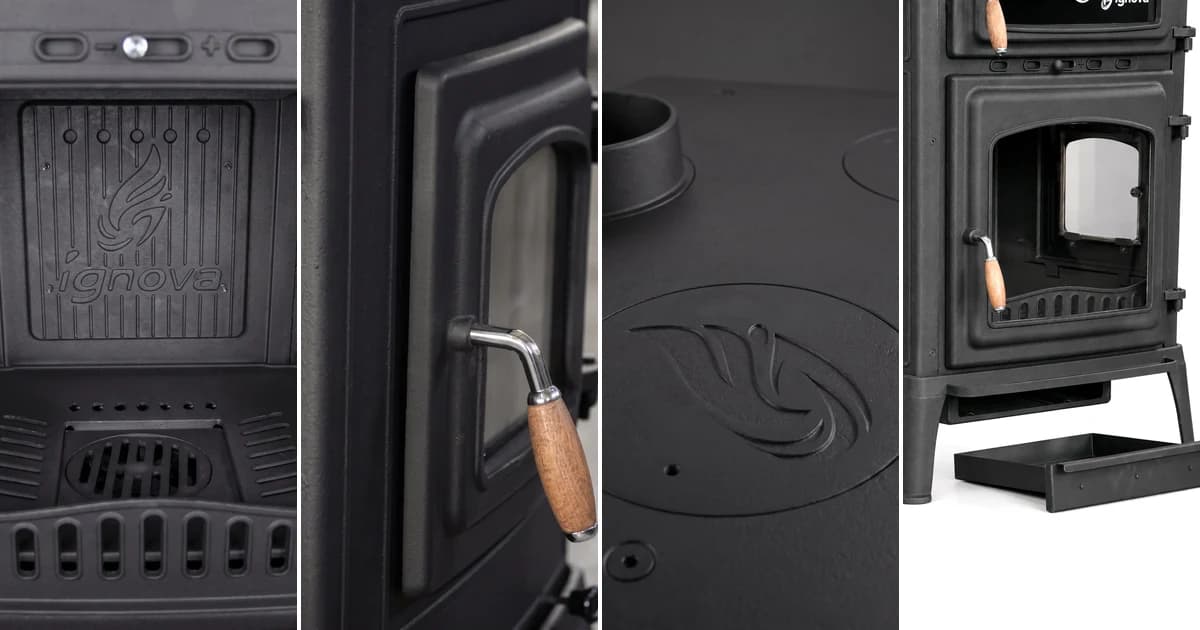
Inspect the stove cold, in good light. There should be no hairline cracks at the corners, around the door or in the firebox; the surface should have no small holes (pores) or leftover casting flash, and the edges should be ground. Most cast-iron stoves are made of several cast parts bolted together; the joints should sit neatly and be sealed. A crack in the firebox can leak smoke and carbon monoxide; a cracked body must not be used.
Wall thickness and weight
Wall thickness is hard to measure when buying; weight is a good clue. Of two cast-iron stoves of the same size, the heavier one usually contains more iron, and the body stores more heat. The manufacturers give the weights of the models on our site: Natural 20h 87 kg, 36h 110 kg, 50h 135 kg, 60h 155 kg, Impera V2 140 kg. Weight alone is not quality; judge it together with the surface, the door and the documents.
Door, gasket, hinges and handle
When closed, the door should sit evenly against the body all round. Test the gasket with paper: shut a strip of paper in the door and pull; it should come out with resistance. Try several points; where it slides out easily, the gasket is not sealing. The hinges should not sag or wobble, the handle should lock easily, and the air sliders should move without sticking. For the Impera V2 the manufacturer lists wooden handles that stay cool. Gaskets harden with use; replacing them is normal maintenance.
Glass and paint
Stove glass is heat-resistant ceramic glass; ordinary glass cannot take stove heat. The glass should sit on a gasket in its frame without being clamped tight. For the Natural models the manufacturer lists 3 ceramic panes; for the Impera V2 three-sided ceramic glass rated to 800 °C. The paint should be heat-resistant stove paint, with no blistering or runs. A paint smell during the first fires is normal: first firing and care of a cast-iron stove.
Documents, spec sheet and CE
The standard for solid-fuel room heaters is EN 13240 (TS EN 13240 in Türkiye), and for solid-fuel cookers EN 12815; the EN 16510 series has been published to replace them. These standards set how values such as output, efficiency, carbon monoxide emissions, surface temperature and safe distance to combustible materials are tested. Under the EU Construction Products Regulation (305/2011), the manufacturer of a CE-marked stove declares these values in a Declaration of Performance (DoP). A "CE" label alone is not enough; ask for the declaration and the spec sheet. Since 2022 the EU has required closed solid-fuel stoves to reach at least 65% seasonal efficiency.
Our product data contains no standard or CE certificate information for our models, so we make no certification claim here. If you want a certificate or spec sheet, ask on WhatsApp before ordering. For the Natural models the manufacturer states an A+ (Eco) energy class; for the Impera V1 the manufacturer has not published a spec sheet.
Warranty and spare parts
A quality product comes with a written warranty with clear coverage. For the Impera V2 the manufacturer gives a 2-year warranty on the cast body; for our other models, ask for the term before ordering. Being able to get wearing parts such as glass, gaskets and grates later extends the stove's life.
Examples for which the manufacturer gives weight and glass details:
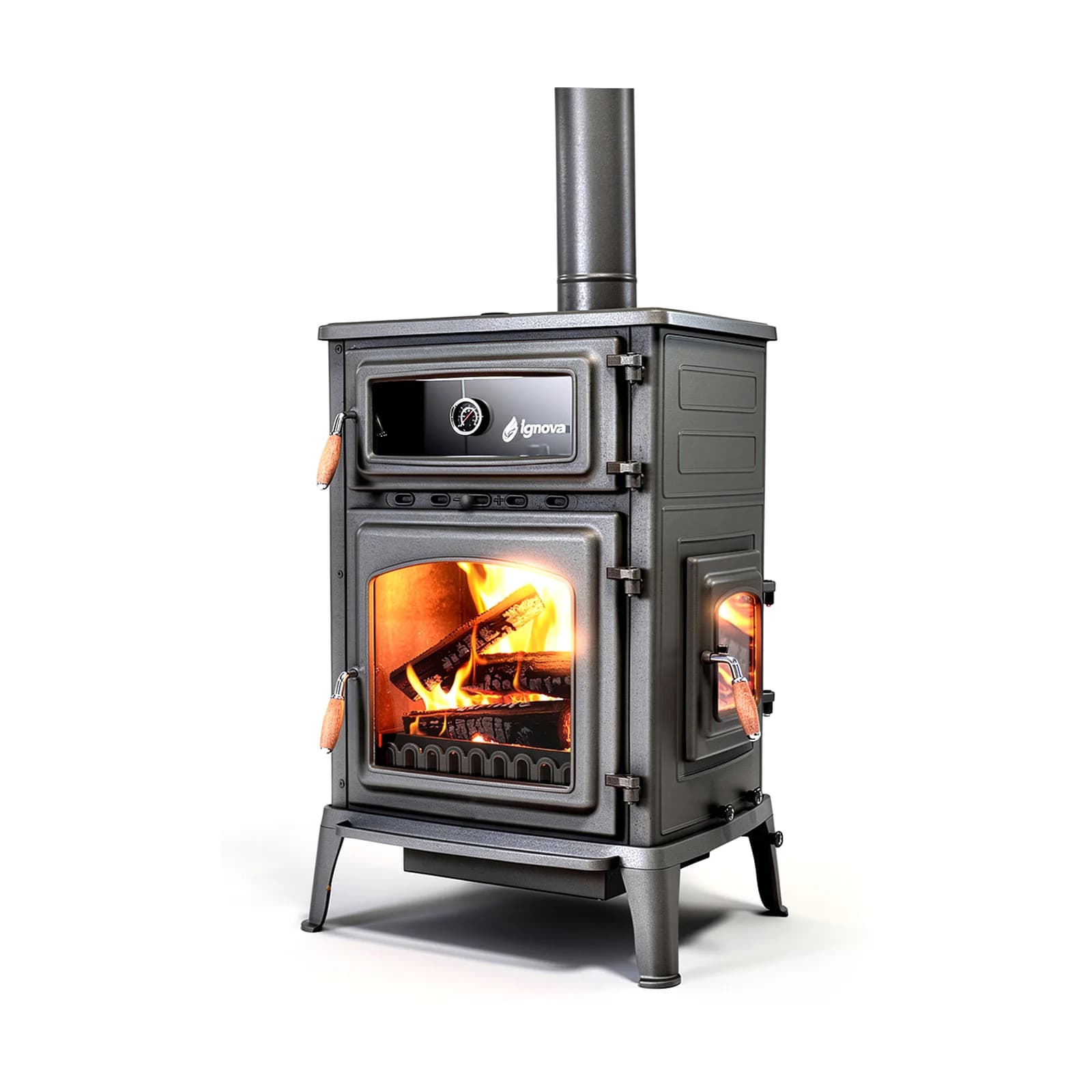
Ignova Impera V2 Cast-Iron Fireplace Stove with Oven
Heat output: 14 kW · Heating area: 70–140 m²
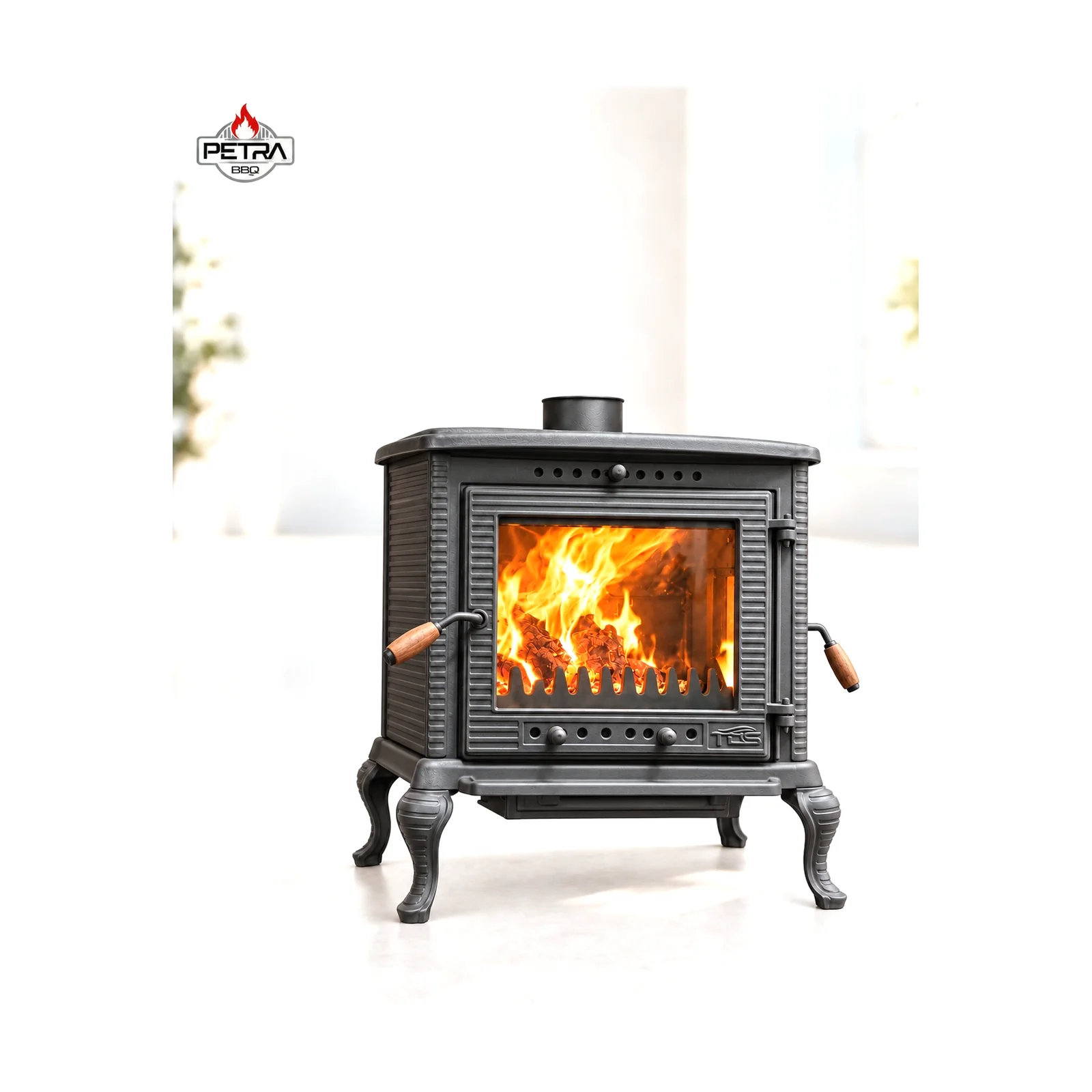
Natural Stove 20h Cast-Iron Fireplace-Style Wood & Coal Stove
Power range: 4–6 kW · Heating area: 40–50 m²
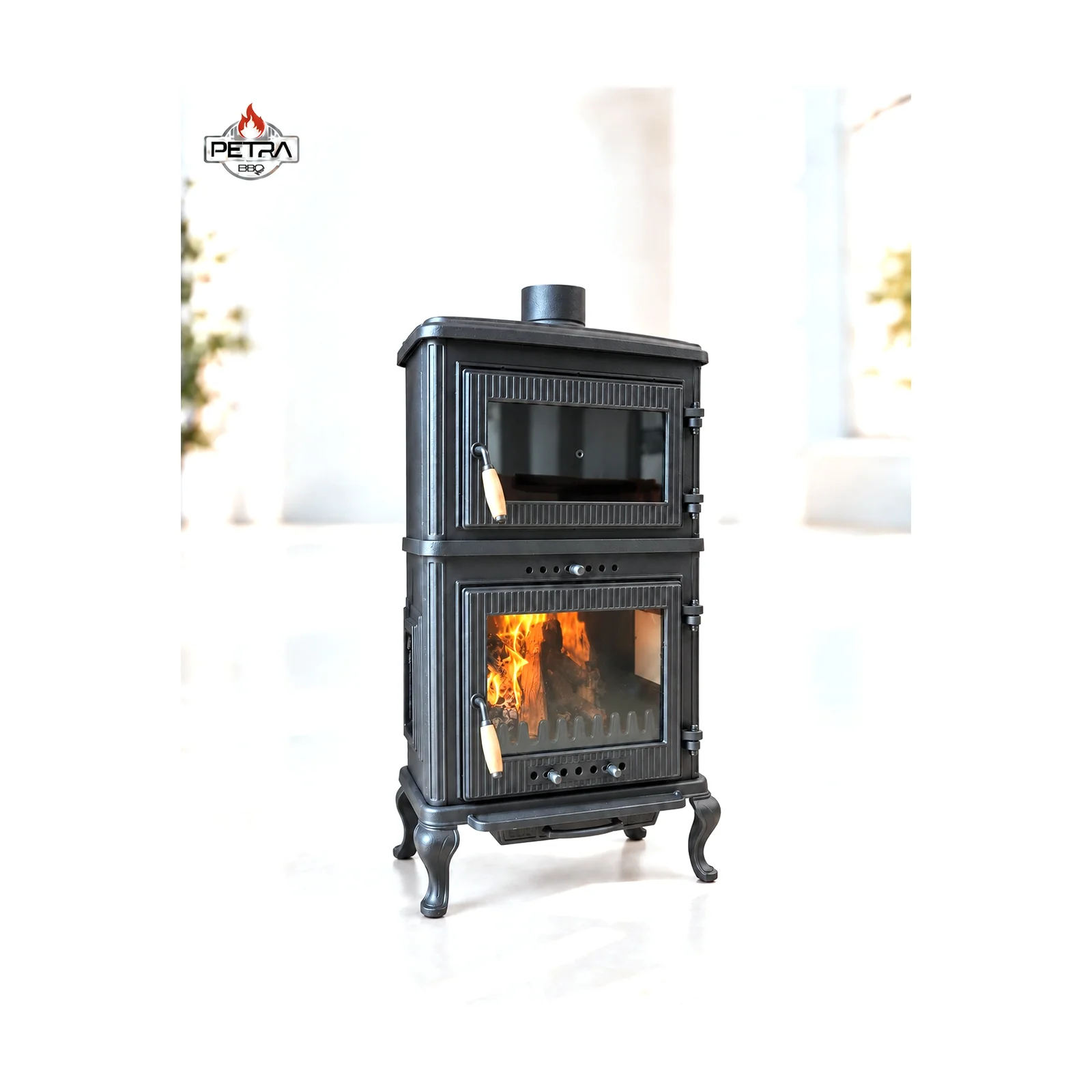
Natural 60h Cast-Iron Vertical Cooker Stove with Oven (Wood & Coal)
Power range: 12–14 kW · Heating area: 70–80 m²
What does it depend on?
- Casting and workmanship: material grade, surface, joints.
- Sealing: door, gasket, glass seat; working air controls.
- Documents: spec sheet, standard, Declaration of Performance, written warranty.
- Use: even the best cast iron can crack from sudden cooling or impact; it needs a gradual first firing and the right fuel. Buying checklist: what to look for when buying a cast-iron stove.
Safety note
No stove is smokeless; a cracked body or a badly seated door can leak smoke and carbon monoxide. Never pour water on hot cast iron. Use a carbon monoxide detector in the stove room; if you have a headache, dizziness or nausea, air the room, go outside and call 112: signs of stove fumes and carbon monoxide detectors.
Frequently asked questions
How can you tell if a cast-iron stove is cracked?
Look at it cold in good light; when lit, smoke or the glow of embers shows through a crack. A stove with a cracked body must not be used.
Is a heavier cast-iron stove better quality?
Of the same size, the heavier one usually contains more iron and stores more heat; but the surface, door, gasket and documents must be checked too.
Is a CE mark enough?
Ask for the Declaration of Performance and the spec sheet alongside the mark; output, efficiency, emissions and safe distances are written there.
When should a stove door gasket be replaced?
When paper slides out easily in the paper test, or the gasket is hardened, flattened or broken. Replacing it is normal maintenance.
Does a cast-iron stove crack?
Sudden temperature change and impact can crack it. Running-in and care: first firing and care of a cast-iron stove.
Sources: manufacturer pages Ignova Impera V2, Ignova Impera V1, Natural 20h, Natural 60h; CE and Declaration of Performance (EU) 305/2011 Construction Products Regulation; minimum efficiency (EU) 2015/1185 Ecodesign, Annex II.
Products in this article
- Ignova Impera V2 Cast-Iron Fireplace Stove with Oven₺30,000 excl. VAT, ₺36,000 incl. VAT
- Natural Stove 20h Cast-Iron Fireplace-Style Wood & Coal Stove₺18,750 excl. VAT, ₺22,500 incl. VAT
- Natural 60h Cast-Iron Vertical Cooker Stove with Oven (Wood & Coal)₺31,250 excl. VAT, ₺37,500 incl. VAT
Current Price List
Starting prices for our coal, firewood and olive-pomace products: the amount excluding VAT, with the VAT-inclusive amount below it. Products without a listed price are quoted on WhatsApp.
| Product | Unit | Starting Price |
|---|---|---|
| Süper Enerji Siberian Coal | 25 kg bag | ₺375 excl. VAT, ₺450 incl. VAT |
| Domestic Soma CoalLimited stock | 25 kg bag | ₺180 excl. VAT, ₺216 incl. VAT |
| Cal Energy İmbat Coal — Grade 1Limited stock | 25 kg bag | ₺375 excl. VAT, ₺450 incl. VAT |
| Cal Energy İmbat Coal — Grade 2Limited stock | 25 kg bag | ₺350 excl. VAT, ₺420 incl. VAT |
| Cal Energy İmbat Nut Coal — Grade 1Limited stock | 25 kg bag | ₺375 excl. VAT, ₺450 incl. VAT |
| Cal Energy İmbat Nut Coal — Grade 2Limited stock | 25 kg bag | ₺350 excl. VAT, ₺420 incl. VAT |
| Central Heating Coal (Walnut Size)Made to order | — | Ask on WhatsApp |
| Central Heating Coal (Nut Size)Made to order | — | Ask on WhatsApp |
| Block Coal (Large Lump)Made to order | — | Ask on WhatsApp |
| Domestic Lignite Coal (Lump)Made to order | 25 kg bag | ₺160 excl. VAT, ₺192 incl. VAT |
| Root Coal (Domestic)Made to order | 40 kg sack | ₺290 excl. VAT, ₺348 incl. VAT |
| Pressed Coal (Briquettes)Made to order | — | Ask on WhatsApp |
| Oak Firewood (Dry) | 1 sack (20-25 kg) | ₺400 excl. VAT, ₺480 incl. VAT |
| Yellow Oak Stove Wood | Bagged — 30 kg | ₺400 excl. VAT, ₺480 incl. VAT |
| Red Oak Stove Wood | Bagged — 28 kg | ₺400 excl. VAT, ₺480 incl. VAT |
| Oak Firewood (6 Months Seasoned) | 1 sack (20-25 kg) | ₺400 excl. VAT, ₺480 incl. VAT |
| Yellow Oak Firewood (6 Months Seasoned) | 1 sack (20-25 kg) | ₺400 excl. VAT, ₺480 incl. VAT |
| 100% Pine Wood Pellets (ENplus A1) | 15 kg bag | ₺200 excl. VAT, ₺240 incl. VAT |
| Hazelnut Shell FuelMade to orderPrepaid | — | Ask on WhatsApp |
| Pine Kindling and Wood Pieces | Bag (17-23 kg) | ₺250 excl. VAT, ₺300 incl. VAT |
| Pirina (Olive Pit Fuel)Prepaid | 25 kg sack | ₺225 excl. VAT, ₺270 incl. VAT |
The top line of each price excludes VAT (+ VAT); the VAT-inclusive amount below it is what you pay. Prices can change. Message us on WhatsApp for the current price and a quote including delivery.
Ask for a Price on WhatsApp