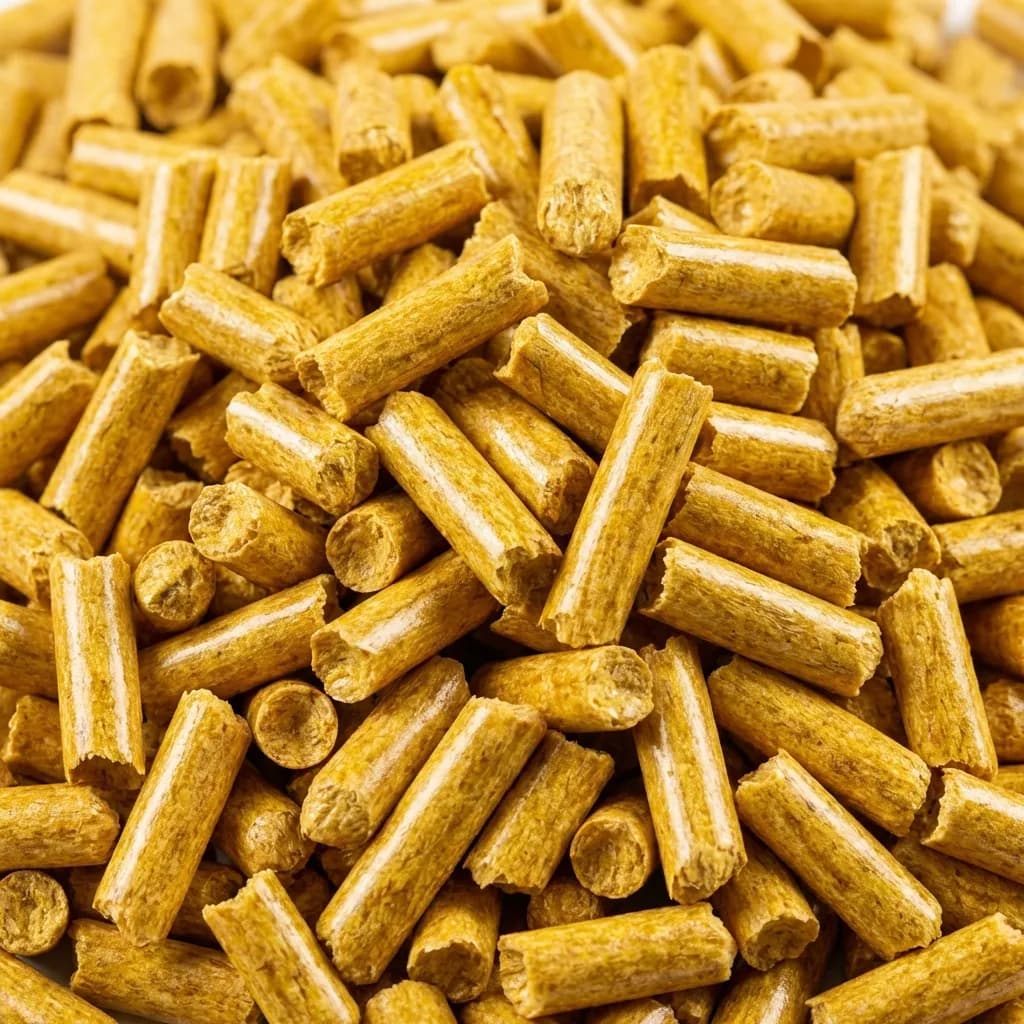
Pine Pellets or Oak and Beech Pellets? The Differences and Who Each Suits
One of the questions we hear most when people buy pellets is: "Are pine pellets better, or oak pellets?" Plenty of pages online speak with certainty for either side, and most contradict each other. We sell pine pellets; even so, this article only lists differences we could confirm from reliable sources, and says so plainly where we could not.
What do softwood and hardwood mean?
Conifers such as pine, spruce and fir are softwoods; broadleaved trees such as oak, beech and hornbeam are hardwoods. The names are botanical and say nothing about how hard a pellet is. Pine pellets are softwood pellets; oak and beech pellets are hardwood pellets. Pellets pressed from the sawdust of several species are sold as "mixed pellets".
1. Heating value: a real but small difference
Softwoods contain more lignin and resin than hardwoods, and both have a higher heating value than cellulose. So per kilogram of dry wood, softwoods have a slightly higher heating value. According to the review by A. J. Baker of the US Forest Products Laboratory, the higher heating value of oven-dry wood is about 20 MJ/kg for hardwoods and about 21 MJ/kg for softwoods, a difference of roughly 5%.
The same source adds two cautions: individual samples already vary by about ±5%, and it is not valid to list exact values species by species. So do not trust a table that gives a precise calorie figure for "pine pellets" against "oak pellets". What sets the heating value of the pellets you buy is their moisture and class, not the species: in all its classes ENplus requires a net calorific value of at least 16.5 MJ/kg (4.6 kWh/kg) as received.
2. Ash: bark and cleanliness matter more than species
You will often read that "pine pellets leave little ash and oak pellets a lot". We could not find a reliable source that confirms this as a general rule. What can be confirmed is that ash depends mainly on the share of bark and the cleanliness of the raw material. In Baker's review, wood itself has about 0.6% ash and bark about 3%; soil picked up during harvesting and storage adds more.
That is why ENplus does not allow raw material with a high amount of bark and limits ash by class: on a dry basis, at most 0.7% in A1 and at most 1.2% in A2. Pellets made from debarked stem wood or clean sawdust are low in ash whatever the tree.
3. Density: different as timber, the same range as pellets
As timber, oak and beech are denser than pine; that is why an armful of oak outlasts an armful of pine in a wood stove. Pellets are different because they are a pressed product. ENplus requires a bulk density of 600–750 kg/m³ whatever the species. So carrying the firewood rule "hardwood is heavier and burns longer" straight over to pellets is misleading.
4. Slag (clinker)
Slag is the glassy residue that hardens in the burn pot. Research links it to high silicon and potassium in the ash: these elements are low in stem wood and higher in bark and foliage, and sand or soil in the raw material adds silicon. ENplus A1 also requires an ash deformation temperature of at least 1200 °C. We could not find a reliable source that compares pine pellets directly with hardwood pellets for slag; here too the cleanliness of the raw material decides.
5. Binding and durability
What holds a pellet together is lignin, which heats up and softens during pressing and acts as a natural glue. ENplus allows pressing aids such as starch up to 2% in total. Whatever the species, class A1 requires a mechanical durability of at least 98.0%.
What really decides: class and certificate
The ENplus classes are not defined by tree species. Classes A1, A2 and B are set by measured properties such as ash, moisture, mechanical durability, fines, calorific value and bulk density. Class A1 pellets may only be made from stem wood and chemically untreated by-products of the wood-processing industry; that raw material can be pine or beech.
So when you compare two pellets, check these in order:
- The quality seal on the bag: are the ENplus logo, the class (A1 or A2) and the company's own ID number printed together? Verify the number in the ENplus list. We explain how in how to recognise ENplus A1 pellets.
- Diameter: does your appliance's manual say 6 mm or 8 mm?
- Dust and moisture: is there obvious dust, or swollen and crumbling pellets, in the bag?
- Tree species: if all of the above are equal, species is the last and smallest factor.
Who does each suit?
- A household with a pellet stove: pellets of the diameter and class in the manual, with a certificate you can verify. If pine pellets meet those conditions there is no need to look for oak pellets, and the reverse is also true.
- Anyone considering "mixed pellets": a mixture is not bad in itself; what matters is the class on the bag. With mixed pellets of unknown class and certificate, you carry the risk of ash and slag.
- Anyone judging by colour: pellet colour ranges from light yellow to brown with species, bark content and production temperature, and is not a sign of quality on its own.
The pellets we sell are 6 mm pine pellets with the ENplus A1 logo on the bag. For product details and ordering see our pine wood pellets page; for all class limits and delivery areas see wood pellets in İzmir. We work out the heating value and how long a bag lasts in how much heat pine pellets give.
Sources: A. J. Baker (USDA Forest Products Laboratory), "Wood fuel properties and fuel products from woods", 1983; Penn State Extension, "Manufacturing Fuel Pellets from Biomass"; Lindström et al. (2010), Energy & Fuels 24(6); ENplus ST 1001:2022, Annex A, Tables 4 and 5.
Current Price List
Starting prices for our coal, firewood and olive-pomace products. Pellet prices are quoted on WhatsApp.
| Product | Unit | Starting Price (incl. VAT) | Detail |
|---|---|---|---|
| Süper Enerji Siberian Coal | 25 kg bag | ₺450 | View |
| Domestic Soma Coal | 25 kg bag | ₺216 | View |
| Central Heating Coal (Walnut Size) | 25 kg bag | ₺384 | View |
| Central Heating Coal (Nut Size) | 25 kg bag | ₺372 | View |
| Block Coal (Large Lump) | 25 kg bag | ₺336 | View |
| Domestic Lignite Coal (Lump) | 25 kg bag | ₺192 | View |
| Root Coal (Domestic) | 40 kg sack | ₺348 | View |
| Pressed Coal (Briquettes) | 25 kg bag | ₺228 | View |
| Oak Firewood (Dry) | 1 sack (20-25 kg) | ₺480 | View |
| Yellow Oak Stove Wood | Bagged — 30 kg | ₺480 | View |
| Oak Firewood (6 Months Seasoned) | 1 sack (20-25 kg) | ₺156(estimate) | View |
| Yellow Oak Firewood (6 Months Seasoned) | 1 sack (20-25 kg) | ₺180(estimate) | View |
| Pine Wood Pellets (ENplus A1) | — | Ask on WhatsApp | View |
| Hazelnut Shell Fuel | 25 kg sack | ₺156 | View |
| Pine Kindling and Wood Pieces | Bag (17-23 kg) | ₺300 | View |
| Pirina (Olive Pit Fuel) | 25 kg sack | ₺132 | View |
Prices include VAT and can change. Message us on WhatsApp for the current price and a quote including delivery.
Ask for a Price on WhatsApp