When buying pellets, the sign most people trust is the ENplus logo on the bag. But a logo alone proves nothing: printing it is easy, obtaining and keeping the certificate is not. The good news is that ENplus's own rules are written so that anyone can check a bag in a few minutes. Here are those checks in order.
What is ENplus, and what does A1 mean?
ENplus is a quality certification scheme for wood pellets, widely used in Europe and based on the EN ISO 17225-2 standard. It has three classes: A1, A2 and B. The clearest difference is ash content (dry basis): at most 0.7% for A1, 1.2% for A2 and 2.0% for B. Mechanical durability must be at least 98.0% for A1 and at least 97.5% for A2 and B. The moisture limit (at most 10%) and the net calorific value (at least 16.5 MJ/kg, i.e. 4.6 kWh/kg, as received) are the same for all three classes. These figures come from Table 4 of ENplus ST 1001:2022.
They are minimum requirements for the class, not laboratory results for a particular product. Pellets in a bag marked A1 must stay within them.
1. Information that must be on the bag
The ENplus trademark rules (ST 1003:2022) list what a certified bag must carry:
- The words "Wood pellets".
- The name and address of the company that owns the bag design (at least city, postal code, country and website or e-mail). This must be the company listed for that certificate on the ENplus website.
- The ENplus quality seal: the ENplus logo, the quality class (A1 or A2) and the company's unique ENplus ID together, on the front of the bag.
- Diameter: 6 mm or 8 mm.
- Net weight in kg.
- A serial/batch number identifying where and when the bag was filled.
- Two notes: "store in dry conditions" and "use only in appropriate combustion systems according to the manufacturer's instructions and legal regulations".
All of this must be printed directly on the bag. Stickers and handwritten numbers break the rules and are a warning sign in themselves.
2. Verify the certificate number on the official list
This is the most important step. An ENplus ID is a two-letter country code plus a number. On the ENplus lists, producers are numbered 001–299 and traders 301–899. Look the number up on the relevant list:
- Producers: enplus-pellets.eu/producer
- Traders: enplus-pellets.eu/trader
Check three things: does the number match the bag, does the company name match the bag, and is the status "Active"? A company shown as "Suspended" or "Terminated" may not sell under the ENplus logo. The lists can be filtered by country. ENplus also publishes companies that misuse the logo on an imitation companies list.
3. Read the declared values
Printing fuel properties on the bag is optional. If they are printed, the ENplus rule is clear: they must be the class limits or better values proven by a laboratory. The calorific value must be given as received; printing a dry-basis calorific value is prohibited, because ignoring moisture makes the number look higher than it is. Be wary of a high "dry basis" calorie figure on a bag.
4. Dust and broken pellets
ENplus limits fines smaller than 3.15 mm to at most 0.5% when bags are filled. Some breakage happens in transport, so a handful of dust at the bottom is normal. A visible layer of dust or many broken pellets when you open the bag means either the pellets have taken on moisture or their durability is low. Both cause trouble in a pellet stove: dust fouls the feed auger and the burn pot.
5. Appearance, colour and smell
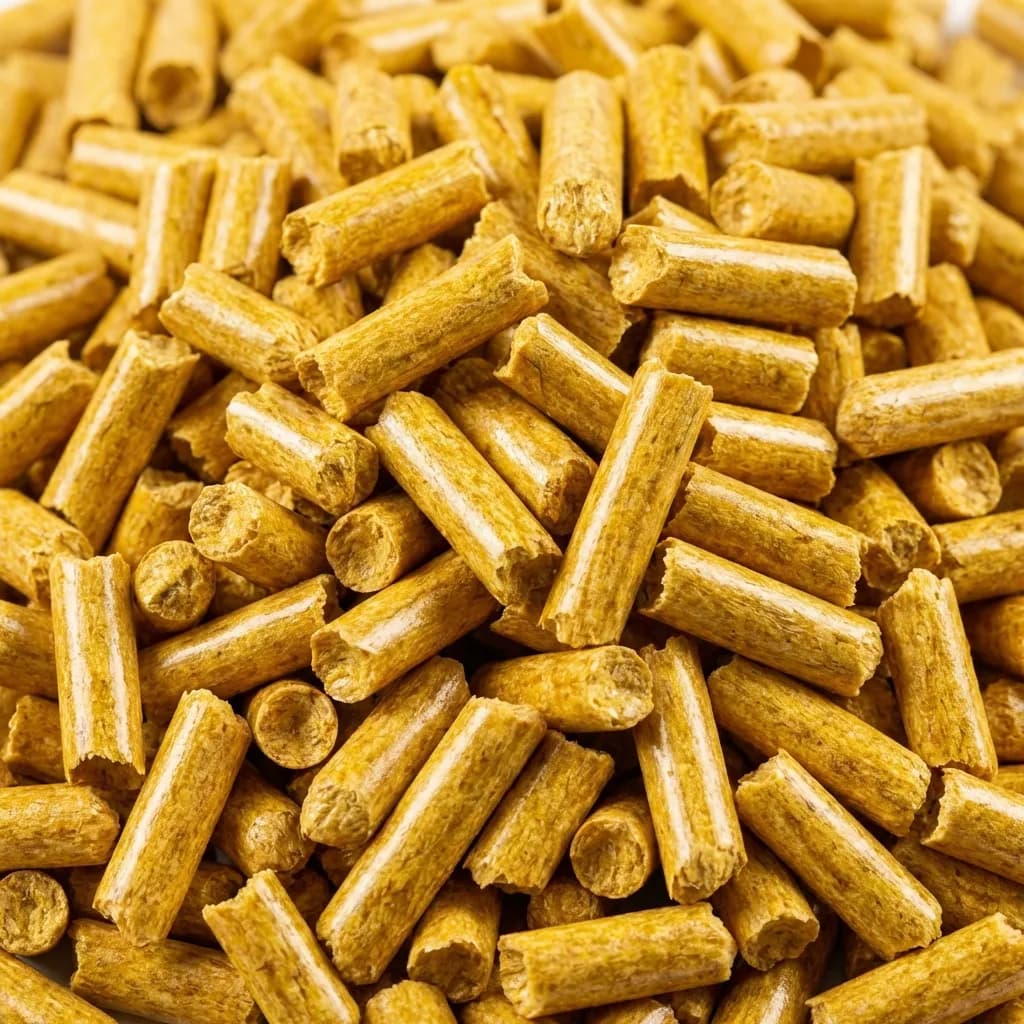
Good pellets have a smooth surface, similar lengths and do not crumble easily in the hand. A common myth is that light-coloured pellets are better: colour depends on the wood species, bark content and production temperature, and on its own says nothing about quality. Smell does matter: if there is any smell other than wood (paint, solvent, chemicals, mould), do not burn them.
Quick checklist
- Are the ENplus logo, quality class and ID printed together on the bag?
- Is the ID on the ENplus producer/trader list, with the same company name and "Active" status?
- Are the company name and address, diameter, net weight, serial number and both notes on the bag?
- Is anything stuck on or handwritten? (It should not be.)
- Is the calorific value given on a dry basis? (It should not be.)
- Is there noticeable dust, many broken pellets or an odd smell?
The bags of the pellets we sell carry the ENplus A1 logo, and you can run the same checks on a bag you buy from us. For all class limits, storage and comparisons with other fuels see our wood pellet page (in Turkish), and for the product itself our wood pellets product page. We do not publish pellet prices on the site; message us on WhatsApp for the current price.
Sources: ENplus ST 1001:2022 (Annex A, Table 4) and ENplus ST 1003:2022 (bag design rules), enplus-pellets.eu.
Current Price List
Starting prices for our coal, firewood and olive-pomace products. Pellet prices are quoted on WhatsApp.
| Product | Unit | Starting Price (incl. VAT) | Detail |
|---|---|---|---|
| Süper Enerji Sibirya Kömürü | 25kg Torba | ₺450 | View |
| Yerli Soma Kömürü | 25kg Torba | ₺216 | View |
| Kalorifer Kömürü (Ceviz) | 25kg Torba | ₺384 | View |
| Kalorifer Kömürü (Fındık) | 25kg Torba | ₺372 | View |
| Karpuz Kömür (Blok) | 25kg Torba | ₺336 | View |
| Yerli Linyit Kömürü (Parça) | 25kg Torba | ₺192 | View |
| Kök Kömür (Yerli) | 40kg Çuval | ₺348 | View |
| Pres Kömür (Briket) | 25kg Torba | ₺228 | View |
| Meşe Odunu (Kuru) | 1 Çuval (20-25kg) | ₺180 | View |
| Sarı Meşe Sobalık Odun | Çuvallı — 30 kg | ₺480 | View |
| Meşe Odunu (6 Aylık) | 1 Çuval (20-25kg) | ₺156(estimate) | View |
| Sarı Meşe Odunu (6 Aylık) | 1 Çuval (20-25kg) | ₺180(estimate) | View |
| Odun Peleti (Çam) | — | Ask on WhatsApp | View |
| Fındık Kabuğu Yakıtı | 25kg Çuval | ₺156 | View |
| Tahta Parçası (Çam) | Torba (17-23 kg) | ₺300 | View |
| Pirina (Zeytin Çekirdeği Yakıtı) | 25kg Çuval | ₺132 | View |
Prices include VAT and can change. Message us on WhatsApp for the current price and a quote including delivery.
Ask for a Price on WhatsApp