Heating usually means coal or wood. But three more fuels are made from agricultural and forestry residue, and used in the right place they are both economical and clean. We sell all three, so we will be straight about their limits too.
Wood pellets
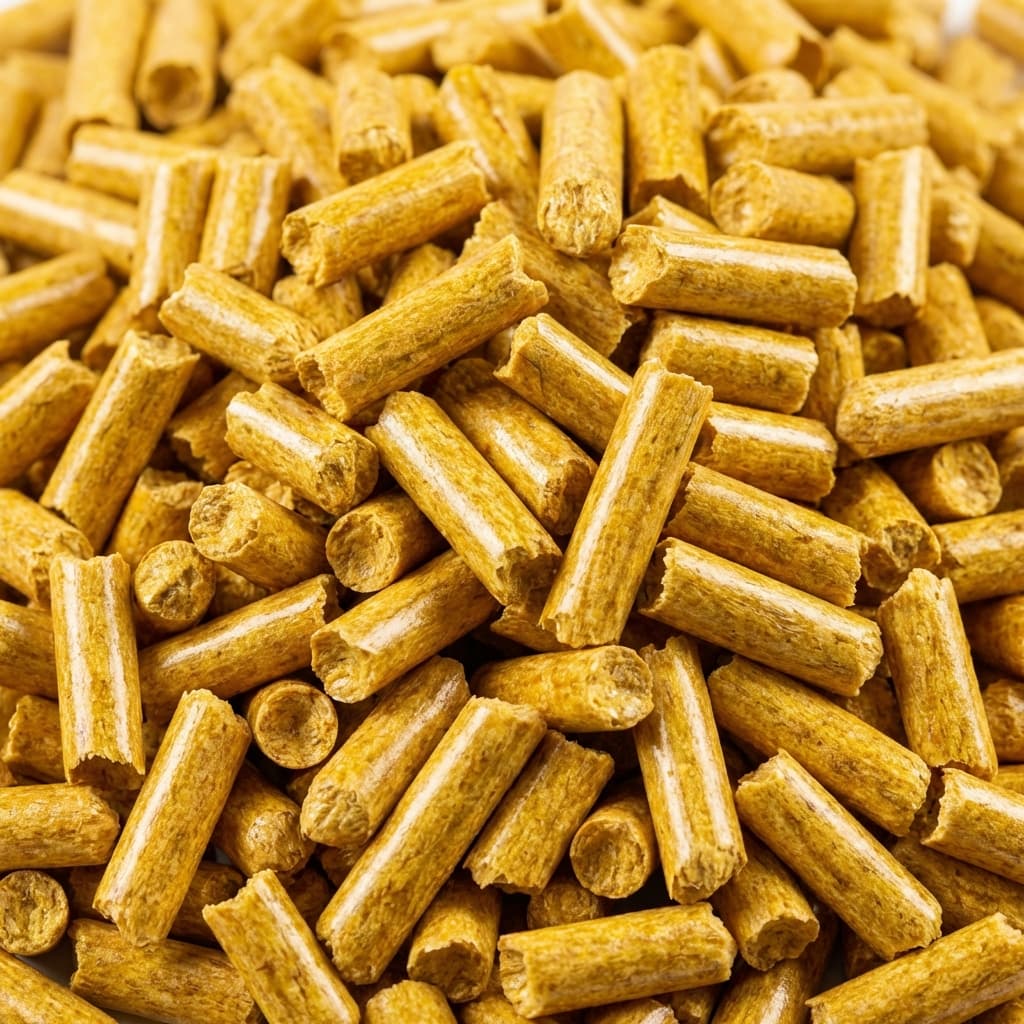
Pellets are dried sawdust compressed under high pressure. No glue is used; the wood's own lignin binds them.
Strengths: Very low moisture, so efficiency is high. The standard size means automatic-feed stoves handle them without trouble. Little ash, and clean to store — bags stack neatly and do not raise dust like coal.
Limit: They require a pellet stove. Thrown into a classic stove, pellets burn away fast and waste their value. Pellet stoves also run on electricity and stop during a power cut.
Who it suits: Anyone with a pellet stove who wants thermostat control and no dust.
Olive pomace (pirina)
The dried residue left from olive oil production. It is abundant in the Aegean region, which keeps the price low here.
Strengths: One of the cheapest fuels per unit. It contains no sulphur, so it is gentler on the flue than coal. Fully renewable — a waste product put to use.
Limit: Lower calorific value than coal, so you burn more for the same warmth. It clumps if it absorbs moisture, and it does not burn efficiently in every stove — poor airflow causes problems.
Who it suits: Budget-focused users with ample storage and a well-ventilated stove. Also common for heating greenhouses and workshops.
Hazelnut shells
Shells from Black Sea hazelnut processing plants, put to use as fuel.
Strengths: Lights quickly and gives fast heat — ideal for warming the room in the morning. The smell is not unpleasant, and it leaves little ash.
Limit: Burns fast and does not hold embers. Not suitable on its own for an overnight fire.
Who it suits: Anyone using it alongside coal. The common pattern: warm the stove quickly with shells in the morning, then add coal for the long burn.
Comparison
A rough ranking. Heat output: coal > pellets > hazelnut shells > pomace. Convenience: pellets > shells > coal > pomace. Cost per unit of heat: pomace and domestic coal are cheapest, pellets the most expensive.
Does mixing make sense?
Yes, and most of our customers do exactly that. Rather than insisting on one fuel, different hours suit different fuels: something quick-lighting in the morning, something long-burning at night. It lowers cost and the stove runs more comfortably.
One caution: your stove manual states which fuels it accepts. Do not put coal in a pellet stove, or pellets in a classic one.
Current Price List
Starting prices for our coal, firewood, pellet and olive-pomace products.
| Product | Unit | Starting Price | Detail |
|---|---|---|---|
| Süper Enerji Sibirya Kömürü | 25kg Torba | ₺375 | View |
| Yerli Soma Kömürü | 25kg Torba | ₺180 | View |
| Kalorifer Kömürü (Ceviz) | 25kg Torba | ₺320 | View |
| Kalorifer Kömürü (Fındık) | 25kg Torba | ₺310 | View |
| Karpuz Kömür (Blok) | 25kg Torba | ₺280 | View |
| Yerli Linyit Kömürü (Parça) | 25kg Torba | ₺160 | View |
| Kök Kömür (Yerli) | 40kg Çuval | ₺290 | View |
| Pres Kömür (Briket) | 25kg Torba | ₺190 | View |
| Meşe Odunu (Kuru) | 1 Çuval (20-25kg) | ₺150 | View |
| Sarı Meşe Sobalık Odun | Çuvallı — 30 kg | ₺400 | View |
| Meşe Odunu (6 Aylık) | 1 Çuval (20-25kg) | ₺130(estimate) | View |
| Sarı Meşe Odunu (6 Aylık) | 1 Çuval (20-25kg) | ₺150(estimate) | View |
| Odun Peleti (Çam) | 15kg Torba | ₺220 | View |
| Fındık Kabuğu Yakıtı | 25kg Çuval | ₺130 | View |
| Tahta Parçası (Çam) | Torba (17-23 kg) | ₺250 | View |
| Pirina (Zeytin Çekirdeği Yakıtı) | 25kg Çuval | ₺110 | View |
Prices can change. Message us on WhatsApp for the current price and a quote including delivery.
Ask for a Price on WhatsApp